
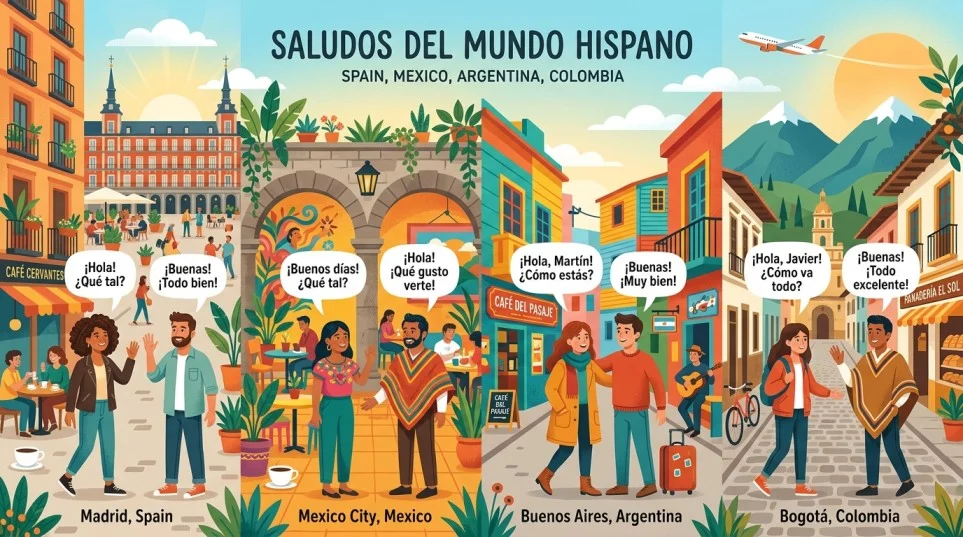
Quick Answer: The most common way to say hi in Spanish is:
- Hola = Hi / Hello
You can use “Hola” in almost every situation, whether you’re talking to friends, strangers, coworkers, or travelers.
Learning how to say hi in Spanish is one of the fastest ways to start speaking naturally. Even if you know only a few Spanish words, a friendly greeting instantly helps you connect with people. It breaks the ice. It opens conversations. Most importantly, it makes you sound more confident from day one.
Spanish ranks among the most spoken languages in the world. More than 500 million people speak it across countries like Spain, Mexico, Colombia, Argentina, Peru, and many others. Because of that, learning simple greetings in Spanish gives you a practical skill you can use while traveling, studying, working, or making new friends online.
Many beginners think there is only one way to say hello in Spanish. Technically, “Hola” works almost everywhere. However, native speakers use dozens of greetings depending on the situation, country, time of day, and relationship.
For example, you might hear:
- “¿Qué tal?” in Spain
- “¿Qué onda?” in Mexico
- “¿Qué más?” in Colombia
- “Buenas” almost everywhere
Some greetings sound polite and professional. Others feel casual and playful. A few are slang expressions that younger speakers use daily.
This guide covers all of them in a simple and practical way.
You’ll learn:
- The meaning of “hola”
- Formal and informal hello in Spanish
- Common Spanish greetings for daily conversation
- How native speakers greet each other
- Pronunciation tips
- Regional differences
- Spanish etiquette greetings
- Beginner Spanish phrases for real conversations
By the end, you’ll know exactly how do you say hi in Spanish in almost any situation.
The Most Common Way to Say Hi in Spanish
If you ask any beginner what “hello in Spanish” is, they’ll probably answer with one word:
Hola
That answer is correct.
“Hola” is the most universal Spanish greeting. You can use it almost anywhere. It works with friends, strangers, coworkers, shopkeepers, classmates, and even formal situations.
Hola Meaning in English
The word “hola” simply means:
- Hello
- Hi
It functions almost exactly like “hi” in English. Because it’s neutral, you don’t have to worry much about sounding too formal or too casual.
Hola Pronunciation
Many English speakers pronounce it incorrectly at first because of the letter “H.”
In Spanish, the “H” is silent.
So instead of saying:
- “HO-la”
You say:
- “OH-la”
The pronunciation sounds soft and smooth.
Why Hola Works Everywhere
One reason Spanish learners love this greeting is flexibility.
You can say:
- Hola amigo
- Hola señora
- Hola chicos
- Hola a todos
It fits nearly every environment.
Imagine walking into:
- A café in Madrid
- A market in Mexico City
- A hotel in Buenos Aires
- A classroom in Miami
“Hola” works in every single one.
That makes it one of the most valuable beginner Spanish phrases you can learn.
Why Greetings Matter in Spanish Culture
In many Spanish-speaking cultures, greetings carry real social importance.
People often greet each other warmly before discussing business, asking questions, or making requests. Skipping greetings can sound cold or rude.
For example, imagine entering a small shop in Spain. If you immediately ask:
- “Where is the bathroom?”
without greeting anyone first, it may feel abrupt.
Instead, native speakers usually begin with:
- Hola
- Buenos días
- Buenas tardes
Then they continue the conversation.
That small detail changes the entire tone.
Spanish Greetings Build Connection
Spanish conversation culture tends to feel more personal and expressive than English.
People often:
- Smile more
- Use affectionate language
- Ask how you are
- Exchange brief pleasantries
Even quick interactions feel warmer.
That’s why learning common Spanish greetings helps you sound more natural immediately.
Formal and Informal Hello in Spanish
One fascinating thing about Spanish greetings is how they shift depending on formality.
Some phrases sound relaxed and friendly. Others show respect and professionalism.
Understanding the difference helps you avoid awkward moments.
Informal Hello in Spanish
Informal greetings work best with:
- Friends
- Family
- Coworkers you know well
- Younger people
- Casual social situations
Common casual Spanish greetings include:
- Hola
- ¿Qué tal?
- ¿Cómo estás?
- ¿Qué pasa?
- ¿Qué onda?
- Buenas
These greetings feel conversational and relaxed.
Formal Spanish Greetings
Formal greetings work better when speaking with:
- Older adults
- Customers
- Professors
- Managers
- Strangers
- Business contacts
Examples include:
- Buenos días
- Buenas tardes
- Buenas noches
- Mucho gusto
- ¿Cómo está usted?
Formal greetings show politeness and cultural awareness.
Quick Comparison Table
| Greeting | Meaning | Formality |
|---|---|---|
| Hola | Hi | Neutral |
| ¿Qué tal? | How’s it going? | Casual |
| ¿Qué onda? | What’s up? | Informal slang |
| Buenos días | Good morning | Formal |
| Buenas tardes | Good afternoon | Formal |
| Buenas noches | Good evening | Formal |
Common Spanish Greetings You’ll Hear Every Day
Native speakers rarely repeat the same greeting constantly. Instead, they rotate phrases naturally.
Here are the most common Spanish greetings used in real life.
Hola
This remains the king of Spanish greetings.
Simple. Flexible. Friendly.
You can use it:
- In person
- On the phone
- In text messages
- In emails
- In professional settings
It’s the safest option for beginners.
¿Qué Tal?
This phrase literally translates loosely to:
- “How’s it going?”
However, native speakers use it casually as both:
- A greeting
- A conversation starter
Example
Person 1: Hola, ¿qué tal?
Person 2: Muy bien, gracias.
This greeting appears constantly in Spain.
¿Cómo Estás?
One of the most important conversational Spanish greetings.
It means:
- How are you?
Unlike English, Spanish speakers genuinely expect some response.
Common Replies
| Spanish Response | English Meaning |
|---|---|
| Bien | Good |
| Muy bien | Very good |
| Todo bien | Everything’s good |
| Más o menos | So-so |
| Excelente | Excellent |
Beginner Tip
“¿Cómo estás?” uses the informal “tú” form.
For formal situations, use:
- ¿Cómo está usted?
Buenas
This greeting sounds short, natural, and extremely common.
Instead of saying:
- Buenos días
- Buenas tardes
many native speakers simply say:
- Buenas
It works casually in stores, elevators, cafés, and apartment buildings.
Think of it like a relaxed shortcut.
Qué Pasa
This phrase means:
- What’s happening?
- What’s up?
You’ll hear it among younger speakers and close friends.
It feels playful and informal.
Casual Spanish Greetings Used by Native Speakers
Textbooks often teach stiff phrases. Real conversations sound different.
Here are authentic ways people greet each other naturally.
Qué Onda
Popular mainly in Mexico.
It roughly means:
- What’s up?
Young people use it constantly.
Example
- ¿Qué onda, amigo?
It sounds casual and friendly.
Qué Más
Very common in Colombia.
This greeting acts almost like:
- What’s up?
- How are things?
It appears in everyday social interactions.
Ey
Spanish speakers also borrowed “Hey” from English.
You’ll hear:
- Ey
- Hey
especially in texting and casual conversation.
Cómo Va
This means:
- How’s it going?
It feels conversational and relaxed.
Qué Haces
Literally:
- What are you doing?
Depending on tone, it can function like:
- Hey, what’s up?
Friends often use it casually online.
Formal Spanish Greetings for Professional Situations
If you work with Spanish speakers or travel internationally, formal greetings matter.
They show:
- Respect
- Good manners
- Professionalism
Buenos Días Meaning
“Buenos días” means:
- Good morning
People use it from early morning until around noon or lunchtime.
Situations Where It Fits
- Hotels
- Offices
- Schools
- Restaurants
- Business meetings
Why It Matters
In many Spanish-speaking countries, entering a room without greeting people first feels impolite.
Even a quick “Buenos días” changes the interaction positively.
Buenas Tardes Meaning
This means:
- Good afternoon
Native speakers typically use it:
- After midday
- Until sunset or evening
Time ranges vary slightly by country.
Buenas Noches Meaning
This phrase means:
- Good evening
- Good night
Context changes the meaning.
As a Greeting
- Good evening
As a Farewell
- Good night
That dual purpose confuses many beginners at first.
Time-Based Greetings in Spanish
Spanish greetings change throughout the day more than English greetings do.
Here’s a simple breakdown.
| Spanish Greeting | English Translation | Typical Time |
|---|---|---|
| Buenos días | Good morning | Morning |
| Buenas tardes | Good afternoon | Afternoon |
| Buenas noches | Good evening/night | Evening |
These greetings sound especially polite.
Spanish Slang Greetings by Country
Spanish changes dramatically across regions.
A phrase common in Mexico may sound strange in Spain.
That’s part of what makes the language exciting.
Mexico
Popular greetings:
- ¿Qué onda?
- ¿Qué pasó?
- ¿Cómo andas?
Mexican Spanish often sounds warm and expressive.
Spain
Common greetings:
- ¿Qué tal?
- Buenas
- Ey
Spain also uses more casual greetings quickly and frequently.
Argentina
Argentine Spanish includes unique expressions like:
- Che
- ¿Todo bien?
“Che” acts like:
- Hey
- Dude
- Mate
depending on context.
Colombia
Colombians often say:
- ¿Qué más?
- ¿Cómo vamos?
These greetings sound energetic and friendly.
Caribbean Spanish
Countries like:
- Cuba
- Dominican Republic
- Puerto Rico
often speak very quickly.
Greetings may sound shortened or blended together.
How Native Spanish Speakers Actually Greet People
Language alone doesn’t tell the full story.
Body language matters too.
Handshakes
Professional situations usually involve:
- Light handshake
- Eye contact
- Friendly tone
Cheek Kisses
Many Spanish-speaking cultures greet friends or relatives with:
- One cheek kiss
This greeting varies by country and familiarity.
Hugs
Close friends often hug naturally during greetings.
Spanish-speaking cultures generally feel physically warmer than some English-speaking cultures.
Tone and Energy Matter
Spanish greetings usually sound lively.
A flat tone can sound uninterested.
Native speakers often:
- Smile
- Raise pitch slightly
- Speak warmly
That emotional energy matters.
How to Respond to Spanish Greetings
Knowing how to say hi in Spanish helps. Knowing how to respond matters just as much.
Common Responses
| Greeting | Natural Response |
|---|---|
| Hola | Hola |
| ¿Cómo estás? | Bien, gracias |
| ¿Qué tal? | Todo bien |
| Buenos días | Buenos días |
Useful Beginner Replies
Bien, Gracias
- Good, thanks
Todo Bien
- Everything’s good
Muy Bien
- Very good
Aquí Nomás
- Just here / doing alright
This last one sounds very casual.
Spanish Greetings for Travelers
Travelers benefit enormously from basic Spanish greetings.
Even simple effort earns respect.
At Hotels
Say:
- Buenos días
- Hola
- Buenas tardes
before asking questions.
At Restaurants
A warm greeting creates smoother interactions.
For example:
- Hola, mesa para dos por favor.
In Taxis
Drivers appreciate polite greetings too.
Simple phrases:
- Buenas
- Hola, ¿cómo está?
work wonderfully.
In Shops
Many small businesses expect greetings first.
Walking in silently can feel awkward culturally.
How to Say Hi in Spanish Over Text
Digital Spanish looks different from spoken Spanish.
Texting culture adds creativity.
Popular Text Greetings
| Phrase | Meaning |
|---|---|
| Holaaa | Hiii |
| Holi | Cute playful hello |
| Ey | Hey |
| Qué tal | How’s it going |
Emoji Culture in Spanish Messaging
Spanish speakers often use emojis warmly.
Common combinations:
- Hola 😊
- Buenas 👋
- Qué tal 😄
Tone feels friendly and expressive.
Beginner Spanish Phrases That Pair With Greetings
Greetings usually lead into short conversations.
Here are useful follow-up phrases.
| Spanish Phrase | English Meaning |
|---|---|
| Mucho gusto | Nice to meet you |
| Cómo te llamas | What’s your name |
| Me llamo | My name is |
| De dónde eres | Where are you from |
| Encantado | Pleased to meet you |
How to Introduce Yourself in Spanish
After greetings, introductions come naturally.
Simple Beginner Conversation
Person 1: Hola
Person 2: Hola, ¿cómo estás?
Person 1: Bien, gracias. ¿Y tú?
Person 2: Muy bien. Me llamo Carlos.
Person 1: Mucho gusto.
That tiny exchange already sounds conversational.
Common Mistakes Beginners Make With Spanish Greetings
Many learners accidentally sound unnatural.
Here are the biggest mistakes.
Translating Directly From English
Some beginners say:
- “Hola amigo mío” constantly
Native speakers usually keep greetings simpler.
Mixing Formal and Informal Speech
Using:
- “¿Cómo estás usted?”
sounds grammatically wrong.
Choose either:
- informal
or - formal
not both together.
Mispronouncing Hola
Remember:
- H is silent
Overusing Slang
Slang changes by country.
A phrase cool in Mexico might sound odd elsewhere.
Beginners should start with universal greetings first.
Forgetting Cultural Warmth
Spanish greetings often sound more expressive.
Short cold replies can feel distant.
Easy Spanish Greetings for Beginners
If you only memorize five phrases today, choose these.
| Spanish | English |
|---|---|
| Hola | Hi |
| Buenos días | Good morning |
| Buenas tardes | Good afternoon |
| Buenas noches | Good evening |
| ¿Cómo estás? | How are you |
These five phrases alone unlock countless conversations.
Why Learning Greetings Speeds Up Spanish Fluency
Many learners focus too much on grammar early.
That slows confidence.
Greetings create:
- Real interaction
- Listening practice
- Pronunciation improvement
- Cultural understanding
They’re tiny phrases with massive practical value.
Spanish Pronunciation Tips for Greetings
Spanish pronunciation feels easier once you know the rules.
Vowels Stay Consistent
Spanish vowels rarely change sound.
| Vowel | Sound |
|---|---|
| A | ah |
| E | eh |
| I | ee |
| O | oh |
| U | oo |
This consistency makes greetings easier to pronounce than English words.
The Silent H Rule
Examples:
- Hola
- Hasta
- Hombre
The “H” stays silent.
Speak Smoothly
Spanish flows rhythmically.
Avoid choppy pronunciation.
Instead of:
- Ho…la
say:
- OH-lah
smoothly and naturally.
Conversational Spanish Greetings for Real Life
Textbook Spanish sometimes sounds robotic.
Real conversations move faster.
Native Conversation Example
Ana: Buenas, ¿qué tal?
Luis: Todo bien, ¿y tú?
Ana: Muy bien, gracias.
Short. Natural. Efficient.
Greeting Someone in Spanish at Work
Professional environments require polite greetings.
Safe Professional Phrases
- Buenos días
- Mucho gusto
- ¿Cómo está?
- Encantado de conocerle
These greetings sound polished and respectful.
Greeting Friends in Spanish
Friends use more relaxed language.
Common Friendly Greetings
- Hola
- Ey
- Qué pasa
- Qué onda
- Qué tal
Tone matters heavily here.
Polite Spanish Greetings for Older Adults
Respect matters culturally.
Use:
- Buenos días
- Buenas tardes
- ¿Cómo está usted?
with:
- elders
- authority figures
- strangers
Spanish Greeting Etiquette Tips
These subtle habits make you sound more natural.
Always Greet First
Even quick interactions usually begin with greetings.
Use Eye Contact
Warm eye contact matters socially.
Smile
Spanish greetings sound emotionally open.
A smile helps.
Don’t Rush Conversations
People often exchange brief pleasantries before business.
That’s normal.
Everyday Spanish Expressions Connected to Greetings
Native speakers often combine greetings with expressions.
Examples
- Hola amigo
- Buenas tardes señora
- Qué tal hermano
- Cómo estás hoy
These combinations make speech sound smoother.
How Spanish Greetings Differ From English Greetings
English greetings often stay brief.
Spanish greetings usually expand slightly.
Instead of:
- “Hi”
you may hear:
- Hola, ¿cómo estás?
- Buenas tardes, ¿todo bien?
The interaction feels more relational.
Best Spanish Greetings for Beginners to Practice Daily
Practice these every day aloud.
Morning
- Buenos días
Afternoon
- Buenas tardes
Evening
- Buenas noches
Casual
- Hola
- Qué tal
Repetition builds confidence quickly.
Fun Facts About Spanish Greetings
- “Hola” likely evolved centuries ago from older greeting forms.
- Spanish greetings vary dramatically across regions.
- Some Latin American countries greet strangers more warmly than English-speaking cultures.
- Spain and Latin America often use different slang greetings.
Spanish Vocabulary Greetings Cheat Sheet
| Situation | Best Greeting |
|---|---|
| Meeting friends | Hola |
| Professional meeting | Buenos días |
| Text message | Holaaa |
| Talking to elders | Buenas tardes |
| Casual hangout | Qué tal |
| Mexican slang | Qué onda |
| Colombian slang | Qué más |
Daily Practice Routine for Learning Spanish Greetings
Day 1
Learn:
- Hola
- Buenos días
Day 2
Practice:
- ¿Cómo estás?
- Bien, gracias
Day 3
Learn:
- Buenas tardes
- Buenas noches
Day 4
Try slang:
- Qué tal
- Qué onda
Day 5
Practice full mini conversations.
Small daily repetition works better than long study sessions.
Frequently Asked Questions About Saying Hi in Spanish
How Do You Say Hi in Spanish?
The most common way is:
- Hola
It works in nearly every situation.
What Is the Difference Between Hola and Buenos Días?
“Hola” means:
- Hi
“Buenos días” means:
- Good morning
The second sounds slightly more formal.
What Is the Most Common Spanish Greeting?
“Hola” remains the most universal Spanish greeting worldwide.
Is Hola Formal or Informal?
It’s mostly neutral.
You can use it casually or professionally.
How Do Mexicans Say Hi?
Common Mexican greetings include:
- Hola
- Qué onda
- Qué pasó
What Does Qué Tal Mean?
It means:
- How’s it going?
- How are things?
Can Buenas Noches Mean Both Hello and Goodbye?
Yes.
Context changes the meaning.
Final Thoughts on How to Say Hi in Spanish
Learning how to say hi in Spanish seems simple at first. Yet greetings carry enormous cultural value. They shape first impressions. They make communication smoother and more natural.
The good news is you don’t need hundreds of phrases to start speaking confidently.
A few greetings already take you far:
- Hola
- Buenos días
- Buenas tardes
- Buenas noches
- ¿Qué tal?
Master those first.
Then slowly add:
- slang greetings
- regional expressions
- conversational responses
Remember something important: native speakers usually appreciate effort more than perfection.
Even basic Spanish greetings show respect and openness.
So next time you meet a Spanish speaker, don’t hesitate.
Smile. Say:
- “Hola.”
That one small word can open an entire conversation.
Discover More:-
- What Does “Shared With You” Mean on TikTok? Complete Guide to TikTok Shared With You Feature
- What Does BOP Mean on TikTok? Complete Slang Meaning Guide