
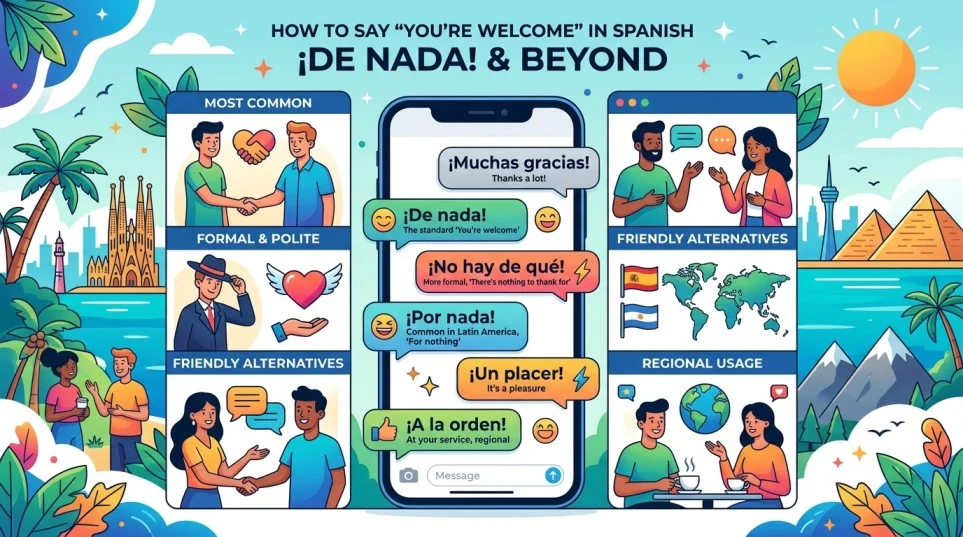
Quick Ans: Looking for other ways to say de nada? Whether you’re speaking Spanish, texting friends, helping a customer, or just want to sound more natural, there are plenty of alternatives. Some are casual, some professional, and some are perfect for everyday conversations.
Top alternatives: No hay problema, Con gusto, No fue nada, Por supuesto, Es un placer
You help someone carry a box. A friend thanks you for a favor. A customer appreciates your assistance. Instantly, you reply with the classic Spanish phrase: de nada. It works every time, but sometimes it can feel repetitive.
That is why knowing other ways to say de nada can make your conversations sound more natural, expressive, and even more fluent. Just like English speakers switch between “you’re welcome,” “no problem,” and “happy to help,” Spanish speakers use different responses depending on the situation, relationship, and vibe.
Whether you’re chatting with friends, texting, traveling, working with customers, or improving your Spanish skills, this guide gives you plenty of alternatives that sound authentic and conversational. From casual favorites to professional replies, you’ll find the perfect phrase for every moment.
Casual Alternatives
No hay problema
Example: After helping a friend find an address.
Meaning: It was no trouble at all.
No pasa nada
Example: When someone thanks you for a small favor.
Meaning: It is not a big deal.
Claro
Example: After holding a door open.
Meaning: Of course.
Por supuesto
Example: Helping someone quickly.
Meaning: Certainly.
Está bien
Example: After doing a simple task.
Meaning: Everything is fine.
No te preocupes
Example: When someone feels guilty for asking.
Meaning: Don’t worry about it.
Sin problema
Example: Helping with directions.
Meaning: No problem.
Todo bien
Example: Casual chats with friends.
Meaning: It is all good.
Dale
Example: Informal conversations.
Meaning: Sure thing.
Tranquilo
Example: Someone repeatedly thanks you.
Meaning: Relax, it is okay.
Faltaba más
Example: Helping someone you know.
Meaning: It was the least I could do.
No es nada
Example: After a minor favor.
Meaning: It is nothing.
Seguro
Example: Casual assistance.
Meaning: Certainly.
Obvio
Example: Among close friends.
Meaning: Obviously.
Ni lo menciones
Example: After a simple act of kindness.
Meaning: Don’t even mention it.
Professional Alternatives
Con gusto
Example: Helping a customer.
Meaning: I was happy to help.
Es un placer
Example: Business interactions.
Meaning: It is a pleasure.
Para servirle
Example: Customer service situations.
Meaning: I am here to serve you.
Ha sido un placer ayudarle
Example: Professional assistance.
Meaning: It was a pleasure helping you.
A sus órdenes
Example: Formal customer interactions.
Meaning: At your service.
Con mucho gusto
Example: Workplace communication.
Meaning: Very happy to help.
Siempre a la orden
Example: Service-related conversations.
Meaning: Always available to assist.
No hay de qué
Example: Professional thank-you exchanges.
Meaning: There is no need to thank me.
Encantado de ayudar
Example: Business settings.
Meaning: Delighted to help.
Fue un gusto
Example: After completing assistance.
Meaning: It was a pleasure.
Estamos para ayudar
Example: Team support situations.
Meaning: We are here to help.
Con todo gusto
Example: Customer service responses.
Meaning: Gladly.
Cuando guste
Example: Professional hospitality.
Meaning: Anytime you wish.
Gracias a usted
Example: Formal appreciation exchange.
Meaning: Thank you as well.
Es parte de mi trabajo
Example: Workplace conversations.
Meaning: It is part of my job.
Friendly Alternatives
Para eso estamos
Example: Helping a friend move.
Meaning: That is what friends are for.
Cuenta conmigo
Example: After assisting someone.
Meaning: You can count on me.
Cuando quieras
Example: Offering future help.
Meaning: Anytime.
Siempre que necesites
Example: Helping regularly.
Meaning: Whenever you need.
Aquí estoy
Example: Supporting a friend.
Meaning: I am here for you.
Ya sabes
Example: Friendly interactions.
Meaning: You know how it is.
No tienes que agradecer
Example: Close friendships.
Meaning: You do not need to thank me.
Para servirte
Example: Helping friends.
Meaning: Happy to help.
Con confianza
Example: Encouraging future requests.
Meaning: Feel free to ask.
Es un gusto ayudarte
Example: Doing a favor.
Meaning: It is nice helping you.
Lo hago con gusto
Example: Helping willingly.
Meaning: I do it gladly.
Estamos en contacto
Example: Ongoing support.
Meaning: Stay in touch.
Siempre
Example: Quick friendly response.
Meaning: Anytime.
Ya sabes dónde encontrarme
Example: Offering future help.
Meaning: You know where to find me.
No fue nada
Example: Small favor.
Meaning: It was nothing.
Warm And Kind Alternatives
Me alegra ayudar
Example: Assisting someone sincerely.
Meaning: I am happy to help.
Con cariño
Example: Family interactions.
Meaning: With affection.
Fue un placer ayudarte
Example: Meaningful assistance.
Meaning: I enjoyed helping.
Lo hice con mucho gusto
Example: Helping loved ones.
Meaning: I gladly did it.
Me da gusto ayudarte
Example: Friendly support.
Meaning: Helping makes me happy.
Para mí fue un placer
Example: Warm appreciation.
Meaning: It was my pleasure.
Siempre es un gusto
Example: Repeated assistance.
Meaning: It is always a pleasure.
Estoy feliz de ayudar
Example: Genuine kindness.
Meaning: Happy to help.
Cuenta siempre conmigo
Example: Supporting someone emotionally.
Meaning: Always count on me.
Aquí para ayudarte
Example: Offering support.
Meaning: Here to help.
Me encanta ayudar
Example: Positive interactions.
Meaning: I love helping.
No fue molestia
Example: Reassuring someone.
Meaning: It was not a bother.
Me alegra ser útil
Example: Helpful situations.
Meaning: Glad to be useful.
Lo hice encantado
Example: Warm response.
Meaning: I did it gladly.
Con mucho cariño
Example: Family and close friends.
Meaning: With lots of affection.
Funny Alternatives
Todavía te debo una
Example: Joking with friends.
Meaning: I still owe you one.
No cobro por hoy
Example: Playful conversations.
Meaning: No charge today.
La próxima invitas tú
Example: Casual favors.
Meaning: Next time you treat me.
Todo incluido
Example: Helping someone out.
Meaning: It is all part of the package.
Servicio cinco estrellas
Example: Friendly teasing.
Meaning: Five-star service.
Estoy en modo héroe
Example: After helping someone.
Meaning: Feeling like a hero.
No me agradezcas tanto
Example: Repeated thanks.
Meaning: Do not thank me so much.
Lo vi en una película
Example: Funny assistance.
Meaning: I learned it from a movie.
Era parte del guion
Example: Playful response.
Meaning: It was in the script.
Hoy estoy generoso
Example: Casual joke.
Meaning: Feeling generous today.
Mi manager estaría orgulloso
Example: Meme-style humor.
Meaning: Pretending it is a performance.
Es mi superpoder
Example: Lighthearted conversations.
Meaning: Helping is my superpower.
Todo por la comunidad
Example: Online jokes.
Meaning: Doing it for the people.
Trabajo gratis los martes
Example: Silly humor.
Meaning: Pretending it is free labor.
Acepto aplausos
Example: Friendly teasing.
Meaning: I accept applause.
Formal Alternatives
No hay de qué agradecer
Example: Formal events.
Meaning: No need to thank me.
Ha sido un honor
Example: Respectful situations.
Meaning: It has been an honor.
Fue un verdadero placer
Example: Formal interactions.
Meaning: It was truly a pleasure.
Le agradezco sus palabras
Example: Professional exchanges.
Meaning: I appreciate your words.
Con el mayor gusto
Example: Formal hospitality.
Meaning: With great pleasure.
Es un placer servirle
Example: Customer-facing roles.
Meaning: A pleasure to serve you.
Siempre a su disposición
Example: Business settings.
Meaning: Always at your disposal.
Ha sido un gusto atenderle
Example: Service situations.
Meaning: It was a pleasure assisting you.
Quedo a sus órdenes
Example: Formal customer support.
Meaning: At your service.
Le deseo lo mejor
Example: Professional closings.
Meaning: Wishing you the best.
Con toda atención
Example: Formal communication.
Meaning: Gladly and attentively.
Es un honor ayudarle
Example: Respectful situations.
Meaning: Helping is an honor.
Estoy para servirle
Example: Formal assistance.
Meaning: I am here to help.
Ha sido una satisfacción
Example: Meaningful support.
Meaning: It was satisfying to help.
Muy amable de su parte
Example: Receiving thanks formally.
Meaning: Very kind of you.
Text Message Alternatives
Np 😄
Example: Casual texting.
Meaning: No problem.
Claro 😊
Example: Friendly messages.
Meaning: Of course.
Cuando quieras 👍
Example: Quick replies.
Meaning: Anytime.
Todo bien 😎
Example: Relaxed texting.
Meaning: All good.
Tranqui 😄
Example: Among friends.
Meaning: Relax.
Ni lo menciones 😉
Example: Casual chats.
Meaning: Do not mention it.
Siempre ✨
Example: Warm texting.
Meaning: Anytime.
Ya sabes 😌
Example: Friendly messages.
Meaning: You know.
Con gusto 🙌
Example: Helpful replies.
Meaning: Gladly.
Aquí estoy 😊
Example: Emotional support.
Meaning: I am here.
Cuenta conmigo 💪
Example: Encouragement.
Meaning: You can count on me.
Sin problema 👍
Example: Everyday texts.
Meaning: No problem.
Obvio 😆
Example: Close friends.
Meaning: Obviously.
Todo cool 😎
Example: Modern texting.
Meaning: Everything is fine.
De una 😄
Example: Informal chats.
Meaning: Absolutely.
Polite Alternatives
Con gusto
Example: Helping someone politely.
Meaning: Happy to help.
No fue ninguna molestia
Example: Reassuring others.
Meaning: It was no trouble.
Para eso estamos
Example: Offering support.
Meaning: That is what we are here for.
Es un placer
Example: Courteous interactions.
Meaning: It is a pleasure.
No hay problema alguno
Example: Formal politeness.
Meaning: No problem at all.
Encantado de ayudar
Example: Friendly professionalism.
Meaning: Delighted to help.
Siempre con gusto
Example: Repeat assistance.
Meaning: Always gladly.
Fue un gusto
Example: After helping.
Meaning: It was a pleasure.
Con mucho gusto
Example: Hospitality settings.
Meaning: Very gladly.
No tiene importancia
Example: Small favors.
Meaning: It is not important.
Estoy para ayudar
Example: Supportive conversations.
Meaning: Here to help.
Gracias a usted
Example: Mutual appreciation.
Meaning: Thank you as well.
Ha sido un placer
Example: Professional settings.
Meaning: It was a pleasure.
Para servirle
Example: Customer service.
Meaning: At your service.
Con todo gusto
Example: Respectful assistance.
Meaning: Gladly.
FAQs
What Does De Nada Mean?
De nada literally translates to “it’s nothing” and is commonly used to say “you’re welcome” in Spanish.
Is De Nada Formal Or Casual?
It works in both formal and casual situations, making it one of the most versatile Spanish responses.
What Is The Most Professional Alternative To De Nada?
“Con gusto” and “es un placer” are among the most professional and customer-friendly alternatives.
Can I Use No Hay Problema Instead Of De Nada?
Yes. It is one of the most common modern alternatives and means “no problem.”
Which Alternative Sounds The Friendliest?
“Cuenta conmigo,” “cuando quieras,” and “para eso estamos” often sound warm and friendly.
CONCLUSION
While de nada is a great response, it is far from your only option. Learning other ways to say de nada helps your Spanish sound more natural, expressive, and adaptable to different situations. Whether you want to sound professional, friendly, funny, warm, or casual, there is an alternative that fits perfectly. Try mixing these phrases into your daily conversations, texts, and interactions to build confidence and variety. Save this list, bookmark your favorites, and keep it handy whenever someone says “gracias.” The right response can make your Spanish feel smoother, friendlier, and much more authentic.
Discover More:-
- Other Ways to Say Thank You Too (35+ Examples)
- 200+ Best Replies to Someone Saying Hope You Had a Great Holiday