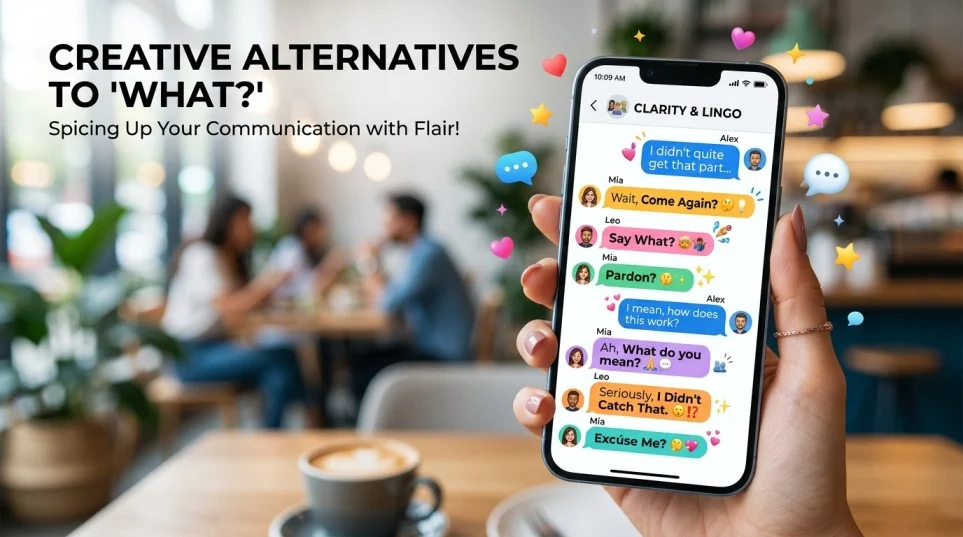
Quick Ans: If you’re looking for other ways to say “what,” the best alternative depends on the situation. You can sound more polite, funny, professional, surprised, or curious just by changing one word or phrase.
Top alternatives: Pardon?, Excuse me?, Could you repeat that?, Sorry?, Come again?
We all say “what” dozens of times a day. Someone mumbles during a meeting, sends a confusing text, drops unexpected news in a group chat, or says something so wild your brain needs a reboot. And before you know it, out comes the classic “what?”
The problem is that “what” can sometimes sound too blunt, confused, annoyed, or repetitive. In texting, DMs, work conversations, and everyday chats, using different phrases can make you sound more polite, funnier, smarter, or even more expressive.
That is why learning other ways to say what is so useful. Whether you want to sound professional in a meeting, playful with friends, or dramatic on social media, this list gives you plenty of fresh alternatives. Pick the vibe that fits the moment and upgrade your conversations instantly.
POLITE WAYS TO SAY WHAT
Pardon?
Example: Used when you did not hear someone clearly.
Meaning: A respectful request for repetition.
Excuse me?
Example: Common in formal conversations.
Meaning: Politely asks for clarification.
Could you repeat that?
Example: During meetings or presentations.
Meaning: Requests the speaker to say it again.
I’m sorry, what was that?
Example: Professional environments.
Meaning: Polite clarification.
Would you mind saying that again?
Example: Customer service interactions.
Meaning: Respectful request.
I didn’t quite catch that.
Example: Noisy environments.
Meaning: Indicates you missed part of the message.
Can you clarify?
Example: Work discussions.
Meaning: Requests more explanation.
Could you elaborate?
Example: Formal conversations.
Meaning: Asks for additional details.
What do you mean exactly?
Example: Clarifying statements.
Meaning: Seeks precision.
Would you explain that further?
Example: Academic settings.
Meaning: Requests more information.
Could you say that one more time?
Example: Everyday politeness.
Meaning: Asks for repetition.
I beg your pardon?
Example: Formal situations.
Meaning: Polite surprise or confusion.
Can you expand on that?
Example: Business discussions.
Meaning: Requests more context.
Could you rephrase that?
Example: Misunderstandings.
Meaning: Asks for different wording.
Sorry, I missed that.
Example: Casual polite conversations.
Meaning: Indicates you did not hear.
FUNNY WAYS TO SAY WHAT
Hold up, what?
Example: Unexpected news from a friend.
Meaning: Playful shock.
My brain just lagged.
Example: Confusing situations.
Meaning: Humorous confusion.
Come again for the people in the back?
Example: Group conversations.
Meaning: Funny request for repetition.
I need subtitles.
Example: Hard-to-hear conversations.
Meaning: Jokes about misunderstanding.
You lost me at hello.
Example: Complex explanations.
Meaning: Humorous confusion.
Wait, what timeline are we in?
Example: Strange news.
Meaning: Expresses disbelief.
My processing speed is buffering.
Example: Surprising information.
Meaning: Playful confusion.
That sentence needs a sequel.
Example: Incomplete explanations.
Meaning: Requests more details.
Please explain like I’m five.
Example: Complicated topics.
Meaning: Wants a simpler explanation.
You cannot just drop that and leave.
Example: Shocking statements.
Meaning: Requests context.
I have questions. Many questions.
Example: Surprising situations.
Meaning: Shows curiosity.
Did my ears just glitch?
Example: Unexpected comments.
Meaning: Humorous disbelief.
Rewind that real quick.
Example: Fast conversations.
Meaning: Asks to repeat.
My brain left the chat.
Example: Confusing information.
Meaning: Playful bewilderment.
That was not on my bingo card.
Example: Unexpected events.
Meaning: Expresses surprise.
PROFESSIONAL WAYS TO SAY WHAT
Could you clarify that point?
Example: Business meetings.
Meaning: Requests clarification.
Can you provide more context?
Example: Workplace discussions.
Meaning: Seeks additional information.
Would you expand on that?
Example: Presentations.
Meaning: Requests elaboration.
Could you explain further?
Example: Team meetings.
Meaning: Asks for details.
I would appreciate clarification.
Example: Formal communication.
Meaning: Polite request.
Can you walk me through that?
Example: Training sessions.
Meaning: Requests explanation.
Could you restate that?
Example: Professional settings.
Meaning: Requests repetition.
Would you mind elaborating?
Example: Corporate discussions.
Meaning: Asks for more information.
Can you be more specific?
Example: Project planning.
Meaning: Requests precision.
Could you provide an example?
Example: Workplace learning.
Meaning: Seeks understanding.
I would like additional details.
Example: Formal discussions.
Meaning: Requests more information.
Can you clarify your meaning?
Example: Business communication.
Meaning: Seeks interpretation.
Would you explain your reasoning?
Example: Strategic meetings.
Meaning: Requests logic.
Could you revisit that point?
Example: Team discussions.
Meaning: Returns to a topic.
Can you help me understand?
Example: Collaborative environments.
Meaning: Seeks clarity.
SARCASTIC WAYS TO SAY WHAT
I’m sorry, the what now?
Example: Ridiculous statements.
Meaning: Playful disbelief.
Did you hear yourself?
Example: Strange comments.
Meaning: Questions the statement.
That sounded better in your head, huh?
Example: Silly ideas.
Meaning: Light sarcasm.
You want to try that again?
Example: Unexpected claims.
Meaning: Challenges the statement.
The audacity is impressive.
Example: Bold comments.
Meaning: Sarcastic reaction.
Interesting choice of words.
Example: Questionable remarks.
Meaning: Dry sarcasm.
You really said that out loud.
Example: Surprising comments.
Meaning: Playful disbelief.
That is certainly a statement.
Example: Strange opinions.
Meaning: Sarcastic acknowledgment.
I need a moment after hearing that.
Example: Wild claims.
Meaning: Mock shock.
Bold strategy.
Example: Unusual ideas.
Meaning: Light sarcasm.
Well, that was unexpected.
Example: Random comments.
Meaning: Dry reaction.
You cannot be serious.
Example: Shocking claims.
Meaning: Expresses disbelief.
What in the group project energy is this?
Example: Messy situations.
Meaning: Humorous sarcasm.
That raised more questions than answers.
Example: Confusing explanations.
Meaning: Criticism with humor.
Respectfully, what?
Example: Absurd statements.
Meaning: Sarcastic confusion.
FLIRTY WAYS TO SAY WHAT
Come closer and say that again.
Example: Romantic conversations.
Meaning: Flirty invitation.
Now you’ve got my attention.
Example: Interesting comments.
Meaning: Shows attraction and curiosity.
Care to repeat that?
Example: Playful flirting.
Meaning: Invites more conversation.
Well, that sounds interesting.
Example: Flirty chats.
Meaning: Encourages continuation.
You’re making me curious.
Example: Teasing conversations.
Meaning: Shows interest.
Tell me more.
Example: Romantic texting.
Meaning: Invites deeper conversation.
Did you just flirt with me?
Example: Playful banter.
Meaning: Calls attention to attraction.
Now I’m intrigued.
Example: Interesting remarks.
Meaning: Signals engagement.
Wait, say that again slowly.
Example: Romantic teasing.
Meaning: Draws out the moment.
That’s a dangerous thing to say.
Example: Flirty situations.
Meaning: Suggests attraction.
You can’t leave it at that.
Example: Mysterious comments.
Meaning: Requests more details.
Go on, I’m listening.
Example: Romantic conversations.
Meaning: Encourages sharing.
You have my full attention now.
Example: Flirty exchanges.
Meaning: Shows interest.
That sounds promising.
Example: Dating conversations.
Meaning: Positive curiosity.
You’re making this interesting.
Example: Texting a crush.
Meaning: Signals attraction.
CASUAL WAYS TO SAY WHAT
Huh?
Example: Everyday conversations.
Meaning: Simple confusion.
Wait, what?
Example: Surprising news.
Meaning: Casual disbelief.
Say again?
Example: Quick chats.
Meaning: Requests repetition.
Come again?
Example: Informal conversations.
Meaning: Asks to repeat.
What was that?
Example: Noisy environments.
Meaning: Requests clarification.
Sorry?
Example: Casual conversations.
Meaning: Polite confusion.
Say that one more time.
Example: Everyday chats.
Meaning: Requests repetition.
I’m lost.
Example: Confusing topics.
Meaning: Admits confusion.
Hold on.
Example: Fast conversations.
Meaning: Requests a pause.
Wait a second.
Example: Unexpected comments.
Meaning: Indicates surprise.
Run that back.
Example: Friendly conversations.
Meaning: Requests repetition.
I missed that.
Example: Casual interactions.
Meaning: Indicates you did not hear.
One more time?
Example: Quick exchanges.
Meaning: Requests repetition.
Can you repeat that?
Example: Everyday use.
Meaning: Asks to hear again.
What do you mean?
Example: Clarifying statements.
Meaning: Seeks understanding.
SURPRISED WAYS TO SAY WHAT
No way.
Example: Shocking news.
Meaning: Expresses disbelief.
You’re kidding.
Example: Unexpected stories.
Meaning: Shows surprise.
Seriously?
Example: Surprising facts.
Meaning: Questions validity.
Wait, really?
Example: Big revelations.
Meaning: Expresses astonishment.
Are you for real?
Example: Unexpected events.
Meaning: Questions reality.
Hold on a minute.
Example: Shocking information.
Meaning: Needs time to process.
That’s wild.
Example: Surprising situations.
Meaning: Shows amazement.
No chance.
Example: Hard-to-believe news.
Meaning: Expresses disbelief.
You’re joking, right?
Example: Incredible claims.
Meaning: Questions truthfulness.
Get out of here.
Example: Surprising stories.
Meaning: Playful shock.
What on earth?
Example: Strange events.
Meaning: Strong surprise.
I did not see that coming.
Example: Unexpected outcomes.
Meaning: Expresses shock.
That can’t be real.
Example: Astonishing news.
Meaning: Questions reality.
What in the world?
Example: Unusual situations.
Meaning: Strong surprise.
That is interesting.
Example: Unexpected information.
Meaning: Expresses amazement.
CUTE WAYS TO SAY WHAT
Hmm?
Example: Soft conversations.
Meaning: Gentle confusion.
Wait, really?
Example: Sweet chats.
Meaning: Cute surprise.
Oh my goodness?
Example: Adorable reactions.
Meaning: Expresses surprise.
Tell me more.
Example: Friendly talks.
Meaning: Invites details.
What happened?
Example: Caring conversations.
Meaning: Shows concern.
Aww, what?
Example: Heartwarming moments.
Meaning: Sweet surprise.
No way, really?
Example: Cute excitement.
Meaning: Positive shock.
You’re serious?
Example: Friendly chats.
Meaning: Curious surprise.
Wait a tiny second.
Example: Playful moments.
Meaning: Cute pause.
Hold up, friend.
Example: Casual warmth.
Meaning: Gentle confusion.
Now I’m curious.
Example: Light conversations.
Meaning: Interest.
What did you say?
Example: Soft clarification.
Meaning: Requests repetition.
That’s adorable, what?
Example: Cute reactions.
Meaning: Warm surprise.
Tell me everything.
Example: Friendly conversations.
Meaning: Wants details.
Oh wow, really?
Example: Positive surprise.
Meaning: Excited curiosity.
DRAMATIC WAYS TO SAY WHAT
Excuse me, what just happened?
Example: Unexpected events.
Meaning: Dramatic confusion.
The plot thickens.
Example: Surprising information.
Meaning: Suggests intrigue.
I need answers immediately.
Example: Shocking revelations.
Meaning: Demands explanation.
This changes everything.
Example: Big news.
Meaning: Highlights significance.
You can’t just drop that bombshell.
Example: Surprising statements.
Meaning: Requests context.
What kind of plot twist is this?
Example: Unexpected situations.
Meaning: Dramatic surprise.
Pause the timeline.
Example: Shocking events.
Meaning: Needs processing time.
I was not prepared for that.
Example: Surprising information.
Meaning: Emotional reaction.
Explain yourself.
Example: Dramatic moments.
Meaning: Requests clarification.
The drama writes itself.
Example: Wild situations.
Meaning: Observes chaos.
This deserves an explanation.
Example: Unexpected news.
Meaning: Seeks answers.
I need the full story.
Example: Juicy gossip.
Meaning: Wants details.
That’s a plot twist.
Example: Surprising events.
Meaning: Highlights unexpectedness.
We’re not skipping past that.
Example: Important statements.
Meaning: Demands explanation.
I have entered confusion.
Example: Strange situations.
Meaning: Dramatic bewilderment.
CLEVER WAYS TO SAY WHAT
Can you connect the dots for me?
Example: Complex explanations.
Meaning: Requests clarity.
Help me understand your logic.
Example: Discussions.
Meaning: Seeks reasoning.
How did we get here?
Example: Unexpected outcomes.
Meaning: Questions the path.
Can you unpack that?
Example: Deep conversations.
Meaning: Requests explanation.
What’s the context?
Example: Missing information.
Meaning: Seeks background.
Walk me through that.
Example: Learning situations.
Meaning: Requests details.
Interesting. Explain further.
Example: Intellectual discussions.
Meaning: Encourages elaboration.
What’s the story there?
Example: Curious conversations.
Meaning: Wants context.
How should I interpret that?
Example: Ambiguous statements.
Meaning: Seeks meaning.
Can you fill in the blanks?
Example: Incomplete information.
Meaning: Requests details.
What’s the bigger picture?
Example: Strategic discussions.
Meaning: Seeks context.
What led to that conclusion?
Example: Analytical conversations.
Meaning: Requests reasoning.
Can you break that down?
Example: Complex topics.
Meaning: Requests simplification.
What’s your thinking behind that?
Example: Discussions.
Meaning: Explores logic.
Can you make that make sense?
Example: Confusing situations.
Meaning: Requests clarity.
CURIOUS WAYS TO SAY WHAT
Tell me more about that.
Example: Learning something new.
Meaning: Shows interest.
How so?
Example: Follow-up questions.
Meaning: Requests explanation.
What makes you say that?
Example: Discussions.
Meaning: Explores reasoning.
Really? Why?
Example: Curious conversations.
Meaning: Seeks more information.
What’s behind that?
Example: Deep discussions.
Meaning: Requests context.
Can you explain?
Example: Everyday curiosity.
Meaning: Seeks understanding.
Interesting, why is that?
Example: Learning moments.
Meaning: Encourages details.
What happened next?
Example: Storytelling situations.
Meaning: Requests continuation.
Where did that come from?
Example: Unexpected comments.
Meaning: Seeks origin.
What’s the reason?
Example: Clarification.
Meaning: Requests explanation.
How did that happen?
Example: Surprising events.
Meaning: Seeks details.
Can you tell me more?
Example: Curious conversations.
Meaning: Invites elaboration.
What do you mean by that?
Example: Clarifying ideas.
Meaning: Requests precision.
Why do you think that?
Example: Discussions.
Meaning: Explores perspective.
What’s the full story?
Example: Interesting situations.
Meaning: Wants complete context.
FAQs
What are some polite alternatives to “what”?
Pardon, excuse me, could you repeat that, and I didn’t quite catch that are excellent polite options.
Is saying “what” considered rude?
Not always, but it can sound abrupt depending on your tone and situation.
What is the most professional alternative to “what”?
“Could you clarify that?” is one of the most professional choices.
What can I say instead of “what” in a text message?
Try “Huh?”, “Wait, really?”, “Come again?”, or “Run that back.”
Is it okay to use funny alternatives?
Absolutely. Funny alternatives often make conversations more engaging and memorable.
CONCLUSION
The word “what” is useful, but it is far from your only option. Whether you want to sound polite in a meeting, funny in a group chat, flirty in a DM, or dramatic on social media, the right alternative can completely change the tone of a conversation. Small wording choices often create stronger impressions, better communication, and more memorable interactions. Save this list, bookmark your favorites, and start mixing them into your daily conversations. The next time you’re tempted to say “what,” you’ll have hundreds of better options ready to go. Happy texting, chatting, and replying!
Discover More:-