
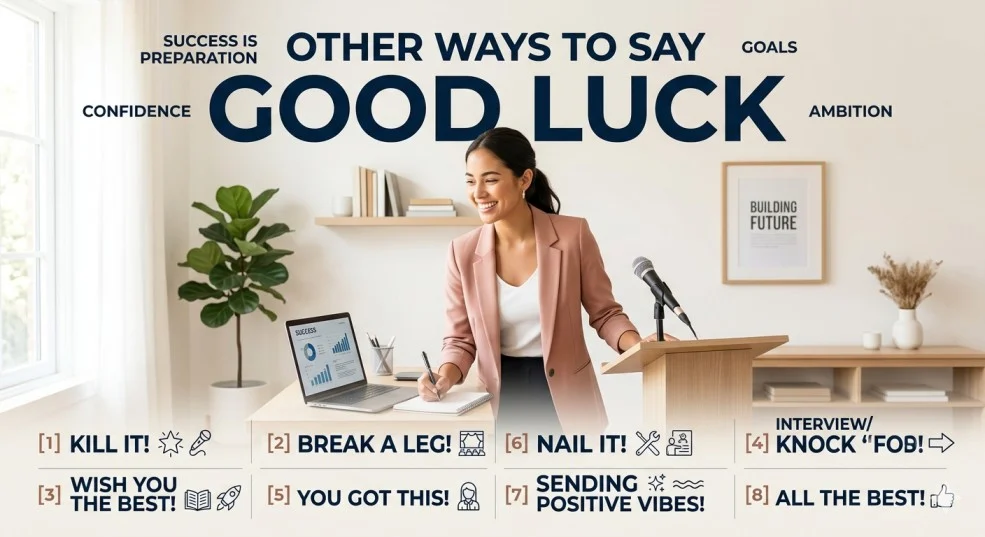
Quick Ans: If you’re searching for other ways to say “good luck,” try: Best of luck, Wishing you success, Fingers crossed for you, You’ve got this, Hope everything goes well. These options help you sound more natural, encouraging, and context-appropriate.
The phrase “good luck” is a simple and common way to wish someone success. People use it in exams, interviews, competitions, and everyday situations.
However, relying on the same phrase repeatedly can feel basic. Learning alternatives to good luck helps you communicate encouragement more creatively and effectively.
It also improves your ability to express excitement in English while adapting your tone for formal, casual, and professional situations.
“The right words can boost confidence and leave a lasting impression.”
Quick Categories Section
Formal Alternatives to “Good Luck”
- Wishing you every success
- Best wishes for your success
- I wish you the very best
- Hoping for your success
Pro Tip: Use these in emails, formal messages, and academic settings.
Casual Alternatives
- You’ve got this
- Fingers crossed
- Hope it goes well
- Go for it
Pro Tip: Perfect for friends and informal conversations.
Professional Alternatives
- Wishing you success in your endeavor
- All the best for your project
- I wish you success in this task
- Best wishes for your upcoming work
Pro Tip: Ideal for workplace communication and polite encouragement.
Informal Expressions
- Smash it
- Knock it out of the park
- Give it your best shot
- You’ll do great
Pro Tip: Use these in relaxed and friendly contexts only.
“Encouragement sounds more powerful when it matches the situation.”
Common Mistakes Section
- Using informal phrases in formal emails
Incorrect: You’ve got this!
Better: Wishing you every success. - Repeating the same phrase too often
Better: Use varied expressions - Using slang in professional context
Incorrect: Smash it!
Better: Best wishes for your success. - Being too vague
Incorrect: Good luck.
Better: Best of luck with your presentation. - Using overly dramatic expressions
Incorrect: You must win this!
Better: I hope everything goes well.
What Does “Good Luck” Mean?
Definition:
It is a phrase used to wish someone success or a positive outcome in a task or situation.
Grammar Note:
It is a fixed expression commonly used as a standalone sentence.
Example:
Good luck on your exam tomorrow!
When to Use “Good Luck”
- Before exams or interviews
- During competitions
- Before presentations
- In everyday encouragement
Spoken vs Written: Both
Formal vs Informal: Neutral
Is It Professional or Polite to Say “Good Luck”?
- Polite? ✔️ Yes
- Professional? ✔️ Yes (but can be improved)
Business Example:
Wishing you success in your presentation tomorrow.
“Professional communication benefits from thoughtful wording.”
Pros and Cons of Using “Good Luck”
Pros
- Simple and clear
- Universally understood
- Friendly tone
- Easy to use
Cons
- Overused
- Lacks personalization
- Limited emotional impact
- Not very formal in some contexts
Other Ways to Say “Good Luck” (With Examples)
These alternatives will help you sound more fluent, confident, and natural in different situations.
Use them based on tone, context, and audience to express encouragement effectively.
1. Best of luck
Meaning: Wish someone success
Explanation: Slightly more polished than the basic phrase
Example Sentence: Best of luck with your interview.
Best Use: General
Worst Use: Slang chat
Tone: Neutral, polite
Context Variability: general
2. Wishing you success
Meaning: Hoping for a positive outcome
Explanation: Formal and clear
Example Sentence: Wishing you success in your new role.
Best Use: Professional
Worst Use: Casual slang
Tone: Formal
Context Variability: professional
3. Fingers crossed for you
Meaning: Hoping things go well
Explanation: Common idiomatic expression
Example Sentence: Fingers crossed for you tomorrow!
Best Use: Casual
Worst Use: Formal writing
Tone: Friendly
Context Variability: casual
4. You’ve got this
Meaning: You can do it
Explanation: Encouraging and motivational
Example Sentence: Don’t worry—you’ve got this!
Best Use: Friends
Worst Use: Formal emails
Tone: Motivational
Context Variability: casual
5. Hope everything goes well
Meaning: Wish for smooth outcome
Explanation: Neutral and versatile
Example Sentence: Hope everything goes well with your meeting.
Best Use: General
Worst Use: Slang
Tone: Neutral
Context Variability: general
6. All the best
Meaning: General good wishes
Explanation: Widely used alternative
Example Sentence: All the best for your exam.
Best Use: Universal
Worst Use: None
Tone: Neutral
Context Variability: general
7. Wishing you the best
Meaning: Hope for success
Explanation: Polite variation
Example Sentence: Wishing you the best in your career.
Best Use: Professional
Worst Use: Slang
Tone: Polite
Context Variability: professional
8. Go for it
Meaning: Take action confidently
Explanation: Motivational phrase
Example Sentence: Go for it—you’ll do great!
Best Use: Casual
Worst Use: Formal
Tone: Energetic
Context Variability: casual
9. I hope you succeed
Meaning: Direct wish for success
Explanation: Simple and clear
Example Sentence: I hope you succeed in your project.
Best Use: Formal
Worst Use: Slang
Tone: Neutral
Context Variability: general
10. Best wishes
Meaning: Polite encouragement
Explanation: Formal and common
Example Sentence: Best wishes for your presentation.
Best Use: Professional
Worst Use: Casual jokes
Tone: Formal
Context Variability: professional
11. Wishing you every success
Meaning: Strong formal encouragement
Explanation: Professional tone
Example Sentence: Wishing you every success in your career.
Best Use: Workplace
Worst Use: Casual
Tone: Formal
12. You’ll do great
Meaning: Confidence in someone
Explanation: Positive reassurance
Example Sentence: Don’t worry—you’ll do great.
Best Use: Friends
Worst Use: Formal
Tone: Encouraging
13. Hope it all works out
Meaning: Wish for positive result
Example Sentence: Hope it all works out for you.
Best Use: Casual
Worst Use: Formal
Tone: Friendly
14. Give it your best shot
Meaning: Try your best
Example Sentence: Just give it your best shot.
Best Use: Informal
Worst Use: Professional
Tone: Motivational
15. Wishing you good fortune
Meaning: Formal success wish
Example Sentence: Wishing you good fortune in your venture.
Best Use: Formal
Worst Use: Casual
Tone: Formal
16. Knock it out of the park
Meaning: Do very well
Example Sentence: You’ll knock it out of the park!
Best Use: Informal
Worst Use: Business
Tone: Energetic
17. Smash it
Meaning: Perform excellently
Example Sentence: Go smash it!
Best Use: Casual
Worst Use: Formal
Tone: Slang
18. I’m rooting for you
Meaning: Supporting someone
Example Sentence: I’m rooting for you today.
Best Use: Friendly
Worst Use: Formal
Tone: Warm
19. May you succeed
Meaning: Formal wish
Example Sentence: May you succeed in your efforts.
Best Use: Formal
Worst Use: Casual
Tone: Formal
20. Hope for the best
Meaning: Expect positive result
Example Sentence: Let’s hope for the best.
Best Use: Neutral
Worst Use: Formal
Tone: Neutral
21. You’re going to do amazing
Meaning: Strong encouragement
Example Sentence: You’re going to do amazing!
Best Use: Casual
Worst Use: Formal
Tone: Motivational
22. Best of success to you
Meaning: Formal wish
Example Sentence: Best of success to you in your journey.
Best Use: Professional
Worst Use: Casual
Tone: Formal
23. I wish you success
Meaning: Direct encouragement
Example Sentence: I wish you success in this role.
Best Use: Formal
Worst Use: Casual
Tone: Neutral
24. Sending you good vibes
Meaning: Positive informal support
Example Sentence: Sending you good vibes today.
Best Use: Casual
Worst Use: Professional
Tone: Informal
25. May things go your way
Meaning: Wish for success
Example Sentence: May things go your way.
Best Use: Formal
Worst Use: Casual
Tone: Gentle
26. Stay confident
Meaning: Encouragement
Example Sentence: Stay confident—you’ll do well.
Best Use: Casual
Worst Use: Formal
Tone: Motivational
27. Do your best
Meaning: Try fully
Example Sentence: Just do your best.
Best Use: Universal
Worst Use: None
Tone: Neutral
28. I believe in you
Meaning: Emotional encouragement
Example Sentence: I believe in you—you can do it.
Best Use: Personal
Worst Use: Formal
Tone: Warm
29. Hope you nail it
Meaning: Do very well
Example Sentence: Hope you nail it!
Best Use: Informal
Worst Use: Professional
Tone: Casual
30. Wishing you great results
Meaning: Positive outcome wish
Example Sentence: Wishing you great results in your exam.
Best Use: Professional
Worst Use: Slang
Tone: Polite
“Encouragement becomes powerful when it sounds sincere and specific.”
Mini Quiz / Self-Check
1. Which is most formal?
A. Smash it
B. Wishing you every success
C. You’ve got this
Answer: B
2. Which is best for friends?
A. I wish you success
B. You’ll do great
C. Wishing you good fortune
Answer: B
3. Which fits workplace email?
A. Best wishes
B. Smash it
C. Nail it
Answer: A
Comparison Table: Top Alternatives
| Phrase | Tone | Best Use |
|---|---|---|
| Best of luck | Neutral | General |
| Wishing you success | Formal | Work |
| Fingers crossed | Casual | Friends |
| You’ve got this | Informal | Motivation |
| All the best | Neutral | Universal |
| Best wishes | Formal | |
| I’m rooting for you | Warm | Personal |
| Stay confident | Motivational | Casual |
| I believe in you | Emotional | Personal |
| Wishing you great results | Professional | Work |
FAQs
1. What are other ways to say good luck?
You can say Best of luck, Wishing you success, or Fingers crossed.
2. Is “good luck” professional?
Yes, but more formal alternatives are better in workplace communication.
3. What is the most formal alternative?
Wishing you every success is highly formal.
4. Can I use slang in work emails?
No, avoid informal phrases like “smash it.”
5. Why learn alternatives?
It improves fluency, tone, and communication effectiveness.
Conclusion
Learning other ways to say good luck helps you communicate encouragement in a more meaningful and appropriate way. It allows you to adapt your tone for different situations.
Practice these alternatives regularly to sound more fluent and confident in English.
See also: Other Ways to Say “Congratulations”
See also: Professional Encouragement Phrases for Emails
CTA: Try using 3 new alternatives in your next message.
Discover More:-