
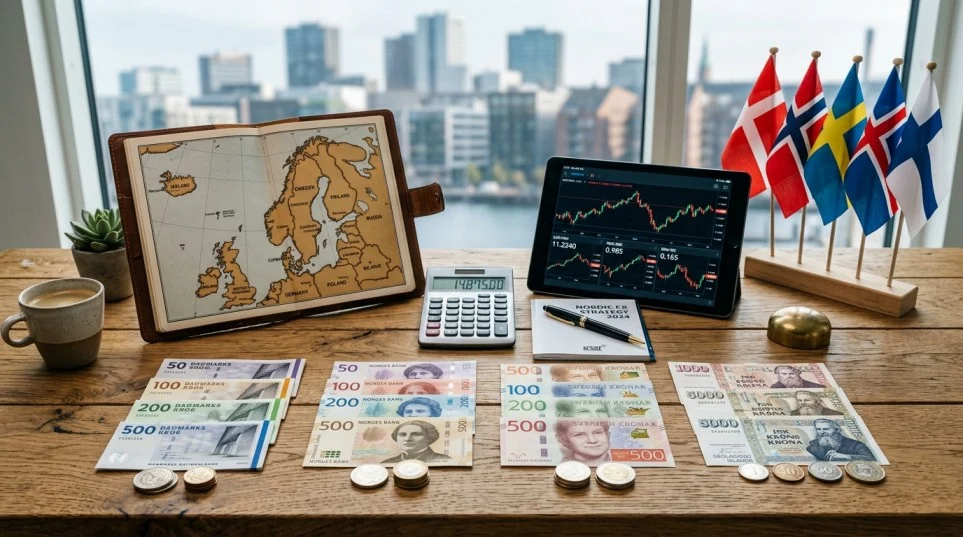
Quick Ans: The term kroner refers to the currencies used in several Nordic and Scandinavian countries. It is the plural form of the word krone, which translates to crown in English. Countries such as Denmark and Norway use the word “krone,” while Sweden uses the closely related term “krona.” Together, these currencies form an important part of the Scandinavian financial system.
When people search for the meaning of kroner, they usually want to know:
- What kroner means in English
- Which countries use kroner
- Whether kroner is a real currency
- The difference between krone and kroner
- How much kroner is worth
- How kroner compares to the US dollar and euro
- Why Nordic countries still use kroner instead of the euro
Kroner is more than just a currency name. It represents a long financial history connected to Scandinavian trade, monarchy, economics, and regional identity.
In modern banking and forex markets, kroner currencies are among the most stable in Europe. Millions of travelers, investors, and international businesses deal with Danish krone, Norwegian krone, and Swedish krona every day.
What Does Kroner Mean?
The word kroner is the plural version of krone. In English, krone means crown.
Historically, many European currencies used royal or crown-related names because monarchies dominated the political systems of Europe for centuries. Scandinavian countries adopted the krone system during the 19th century, and the name remained even after economic systems modernized.
Simple Definition of Kroner
| Word | Meaning |
|---|---|
| Krone | Singular form of the currency |
| Kroner | Plural form of the currency |
| Krona | Swedish singular spelling |
| Kronor | Swedish plural spelling |
For example:
- 1 Danish krone
- 50 Danish kroner
- 1 Norwegian krone
- 100 Norwegian kroner
In Sweden, the spelling changes slightly:
- 1 Swedish krona
- 100 Swedish kronor
Even though the spellings differ, all these words come from the same root meaning: crown.
Kroner Meaning in English
In English, kroner refers to the official money used in certain Nordic countries.
The direct translation is:
Kroner = Crowns
The name reflects historical monarchy traditions in Scandinavia. Similar crown-based currency names exist in other parts of Europe too.
Examples include:
- Czech koruna
- Icelandic króna
- Former Austro-Hungarian crown
The Scandinavian version became especially important because Denmark, Norway, and Sweden once shared a regional monetary cooperation system called the Scandinavian Monetary Union.
Countries That Use Kroner
Several Nordic countries use versions of the kroner currency.
Denmark
Denmark uses the Danish krone.
| Detail | Information |
| Currency Name | Danish krone |
| Currency Code | DKK |
| Symbol | kr |
| Country | Denmark |
| Subunit | Øre |
The Danish krone is one of Europe’s oldest active currencies.
Norway
Norway uses the Norwegian krone.
| Detail | Information |
| Currency Name | Norwegian krone |
| Currency Code | NOK |
| Symbol | kr |
| Country | Norway |
| Subunit | Øre |
Norway’s economy heavily depends on oil and energy exports. Because of that, the Norwegian krone often reacts to global oil prices.
Sweden
Sweden uses the Swedish krona.
| Detail | Information |
| Currency Name | Swedish krona |
| Currency Code | SEK |
| Symbol | kr |
| Country | Sweden |
| Subunit | Öre |
Sweden uses “krona” instead of “krone,” but the meaning is almost identical.
Iceland
Iceland uses the Icelandic króna.
| Detail | Information |
| Currency Name | Icelandic króna |
| Currency Code | ISK |
| Symbol | kr |
| Country | Iceland |
| Subunit | Aurar |
Iceland’s currency differs slightly in spelling because of the Icelandic language.
Difference Between Krone and Kroner
One of the most searched questions online is:
What is the difference between krone and kroner?
The answer is simple.
| Word | Usage |
| Krone | Singular |
| Kroner | Plural |
Examples:
- 1 krone
- 5 kroner
- 20 kroner
- 100 kroner
It works similarly to:
- Dollar → Dollars
- Euro → Euros
- Pound → Pounds
The word changes depending on quantity.
Krone vs Krona
Many people confuse krone and krona.
The difference mainly comes from language.
| Country | Singular | Plural | | Denmark | Krone | Kroner | | Norway | Krone | Kroner | | Sweden | Krona | Kronor | | Iceland | Króna | Krónur |
All of these words share the same historical origin.
Why Is It Called Kroner?
The word comes from the Latin term for crown. European monarchies often linked money to royal authority.
During the 1800s, Scandinavian nations modernized their currencies. Denmark, Sweden, and Norway adopted crown-based names as part of their monetary reforms.
The name symbolized:
- Royal legitimacy
- National identity
- Economic unity
- Financial stability
Even today, the term remains deeply connected to Nordic history and culture.
History of the Kroner Currency
The history of kroner stretches back more than a century.
Scandinavian Monetary Union
In 1873, Denmark and Sweden created the Scandinavian Monetary Union. Norway joined later in 1875.
The union standardized currencies around gold.
Key goals included:
- Easier trade
- Stable exchange rates
- Shared monetary standards
- Economic cooperation
The countries used similar currencies called krone or krona.
Although the monetary union eventually ended after World War I, each country kept its own version of the currency.
Gold Standard Era
Originally, kroner currencies were linked to gold.
That meant paper money could theoretically be exchanged for a fixed amount of gold.
This system created stability but limited monetary flexibility.
Modern Floating Exchange Rates
Today, Scandinavian currencies operate mostly under floating exchange systems.
Their values rise and fall based on:
- Inflation
- Interest rates
- Oil prices
- Trade performance
- Central bank policies
- Global economic trends
Kroner Currency Meaning in Banking
In banking, kroner refers to the official monetary unit used for transactions in Nordic countries.
Banks use currency codes to identify them internationally.
| Currency | Code |
| Danish krone | DKK |
| Norwegian krone | NOK |
| Swedish krona | SEK |
| Icelandic króna | ISK |
These codes appear in:
- International transfers
- Forex trading
- Online banking
- Exchange platforms
- Financial statements
- Credit card transactions
For example:
- DKK = Danish currency
- NOK = Norwegian currency
- SEK = Swedish currency
Kroner in Forex Trading
Kroner currencies are actively traded in global forex markets.
Forex traders buy and sell kroner pairs such as:
- USD/NOK
- EUR/SEK
- DKK/USD
- NOK/SEK
Why Traders Watch Scandinavian Currencies
These currencies attract attention because Scandinavian economies are considered:
- Stable
- Highly developed
- Export-driven
- Financially transparent
Norway’s krone especially gains attention because oil exports strongly influence its value.
When oil prices rise, the Norwegian krone often strengthens.
How Much Is Kroner Worth?
The value of kroner changes daily.
Exchange rates depend on:
- Market demand
- Inflation
- Central bank decisions
- Political stability
- Global trade
Approximate Currency Comparison
| Currency | Approximate Relative Value |
| 1 USD | Several Danish/Norwegian/Swedish kroner |
| 1 EUR | More valuable than most kroner units |
| 1 GBP | Typically stronger than kroner |
Kroner currencies are generally considered stable compared to many emerging market currencies.
Kroner to USD Explained
One of the most common searches online is:
Kroner to USD
This refers to converting Scandinavian currencies into US dollars.
Example conversions may include:
- Danish kroner to USD
- Norwegian kroner to USD
- Swedish kronor to USD
Exchange rates fluctuate constantly because foreign exchange markets operate globally 24 hours a day.
Travelers, importers, investors, and businesses monitor these rates closely.
Kroner Symbol Meaning
The symbol for kroner currencies is usually:
kr
You’ll see this symbol on:
- Price tags
- Bank statements
- Currency exchange websites
- Scandinavian receipts
- Online stores
Examples:
- kr 100
- 250 kr
- NOK 500
The exact placement can vary depending on the country and formatting style.
Kroner Pronunciation
Many English speakers wonder how to pronounce kroner correctly.
Pronunciation Guide
| Word | Pronunciation |
| Krone | Kroh-nuh |
| Kroner | Kroh-ner |
| Krona | Kroh-nah |
The pronunciation changes slightly depending on local Scandinavian accents.
However, English speakers usually pronounce kroner as:
KROH-ner
Kroner Meaning in Urdu
In Urdu, kroner can be translated as:
اسکینڈینیوین ممالک کی کرنسی
It refers to the official currency used in Nordic countries such as Denmark and Norway.
The broader meaning connects to money, banking, and international finance.
Kroner Meaning in Hindi
In Hindi, kroner can be translated as:
स्कैंडिनेवियाई देशों की मुद्रा
It generally refers to the currencies used in Scandinavian nations.
Is Kroner a Real Currency?
Yes. Kroner is absolutely a real currency.
Millions of people use kroner-based currencies daily across Northern Europe.
These currencies support:
- National economies
- Banking systems
- International trade
- Tourism
- Digital payments
- Investments
Scandinavian economies rank among the most advanced and stable in the world.
Why Nordic Countries Still Use Kroner Instead of the Euro
Many European countries adopted the euro, but several Nordic nations kept their own currencies.
Reasons Include:
- Economic independence
- National monetary control
- Flexible exchange rates
- Strong local economies
- Political preferences
Denmark partially links its currency to the euro through exchange mechanisms, but it still maintains the Danish krone.
Sweden held public referendums and chose not to adopt the euro.
Norway is not part of the European Union, so it kept the Norwegian krone.
Scandinavian Currency System Explained
The Scandinavian financial system is known for stability and transparency.
Shared Features of Nordic Currencies
| Feature | Description |
| Strong banking systems | Advanced financial infrastructure |
| Digital payments | High use of cashless transactions |
| Stable economies | Low corruption and strong institutions |
| Central bank independence | Controlled monetary policies |
| High living standards | Strong consumer purchasing power |
Nordic countries consistently rank among the world’s most economically stable regions.
Danish Krone Explained
The Danish krone is Denmark’s official currency.
Important Facts About Danish Krone
| Fact | Information |
| Currency code | DKK |
| Central bank | Danmarks Nationalbank |
| Symbol | kr |
| Introduced | 1875 |
Denmark’s currency remains tightly managed to maintain exchange rate stability.
The Danish economy benefits from:
- Shipping
- Pharmaceuticals
- Renewable energy
- Manufacturing
- Agriculture
Because of Denmark’s strong institutions, the Danish krone is considered reliable in international finance.
Norwegian Krone Explained
The Norwegian krone is Norway’s national currency.
Important Facts About Norwegian Krone
| Fact | Information |
| Currency code | NOK |
| Central bank | Norges Bank |
| Symbol | kr |
| Introduced | 1875 |
Norway’s economy differs from many European nations because of its oil wealth.
The country operates one of the world’s largest sovereign wealth funds.
Oil prices strongly influence the Norwegian krone.
When energy markets rise, NOK often gains value.
Swedish Krona Explained
Sweden’s currency is called the Swedish krona.
Important Facts About Swedish Krona
| Fact | Information |
| Currency code | SEK |
| Central bank | Sveriges Riksbank |
| Symbol | kr |
| Introduced | 1873 |
Sweden has one of the most digital economies in the world.
Cash usage continues to decline as mobile payments and digital banking expand rapidly.
Despite joining the European Union, Sweden chose to keep its own currency.
Icelandic Króna Explained
The Icelandic króna is Iceland’s national currency.
Important Facts About Icelandic Króna
| Fact | Information |
| Currency code | ISK |
| Central bank | Central Bank of Iceland |
| Symbol | kr |
| Introduced | 1885 |
Iceland’s smaller economy makes its currency more volatile compared to other Nordic currencies.
Tourism plays a major role in Iceland’s economy.
Kroner Currency Codes Explained
International banking uses three-letter currency codes.
Scandinavian Currency Codes
| Currency | Code | Country |
| Danish krone | DKK | Denmark |
| Norwegian krone | NOK | Norway |
| Swedish krona | SEK | Sweden |
| Icelandic króna | ISK | Iceland |
These codes follow the ISO 4217 international standard.
What Do the Letters Mean?
| Code | Meaning |
| DKK | Danish Krone |
| NOK | Norwegian Krone |
| SEK | Swedish Krona |
| ISK | Icelandic Krona |
Banks, forex platforms, and international businesses rely on these codes every day.
Kroner in International Trade
Scandinavian currencies matter globally because Nordic countries participate heavily in international trade.
Major Nordic Exports
| Country | Major Exports |
| Denmark | Pharmaceuticals, shipping, machinery |
| Norway | Oil, gas, seafood |
| Sweden | Cars, technology, machinery |
| Iceland | Seafood, tourism, renewable energy |
Strong exports support demand for Scandinavian currencies.
How Exchange Rates Affect Kroner
Exchange rates determine how much one currency is worth against another.
Key Factors That Influence Kroner Value
- Inflation rates
- Interest rates
- Oil prices
- Economic growth
- Trade balances
- Political stability
- Central bank policies
For example:
- Higher interest rates can strengthen a currency.
- Economic uncertainty may weaken it.
- Strong exports often increase demand.
Kroner in Tourism
Tourists visiting Scandinavia regularly use kroner currencies.
Countries Using Kroner Attract Millions of Visitors
| Country | Tourism Highlights |
| Denmark | Copenhagen, castles, biking culture |
| Norway | Fjords, northern lights, mountains |
| Sweden | Stockholm, forests, islands |
| Iceland | Volcanoes, glaciers, geothermal spas |
Travelers often exchange:
- USD to kroner
- Euro to kroner
- Pounds to kroner
Currency exchange services exist at:
- Airports
- Banks
- Hotels
- Online exchange apps
Digital Payments and Cashless Scandinavia
Scandinavian countries lead the world in digital payments.
Many stores now prefer:
- Debit cards
- Mobile apps
- Contactless payments
- Digital wallets
In Sweden especially, some businesses no longer accept cash.
Despite growing digital finance, the kronor and kroner systems remain official legal tender.
Scandinavian Economies and Currency Stability
Nordic economies consistently rank among the strongest globally.
Why Scandinavian Currencies Are Trusted
| Reason | Explanation |
| Strong institutions | Transparent governments |
| Stable politics | Predictable economic policy |
| High education levels | Skilled workforce |
| Advanced industries | Innovation and technology |
| Low corruption | Strong investor confidence |
These strengths help maintain relatively stable currency systems.
Kroner in Foreign Exchange Markets
Forex markets trade trillions of dollars daily.
Scandinavian currencies hold important positions because investors view Nordic economies as stable and advanced.
Popular Forex Pairs
| Forex Pair | Meaning |
| USD/NOK | US dollar vs Norwegian krone |
| EUR/SEK | Euro vs Swedish krona |
| USD/DKK | US dollar vs Danish krone |
Traders analyze:
- Economic reports
- Inflation data
- Interest rate changes
- Energy prices
- Central bank decisions
Kroner Conversion Explained
Currency conversion means changing one currency into another.
Example Conversion Scenarios
| From | To |
| USD | NOK |
| EUR | SEK |
| GBP | DKK |
| ISK | USD |
Conversion rates change every second in global markets.
Banks and exchange providers usually charge fees or spreads during conversion.
How Central Banks Manage Kroner Currencies
Each Nordic country has its own central bank.
Main Responsibilities
- Controlling inflation
- Managing interest rates
- Supporting economic stability
- Supervising financial systems
- Maintaining public confidence
Scandinavian Central Banks
| Country | Central Bank |
| Denmark | Danmarks Nationalbank |
| Norway | Norges Bank |
| Sweden | Sveriges Riksbank |
| Iceland | Central Bank of Iceland |
These institutions strongly influence currency value.
Inflation and the Value of Kroner
Inflation reduces purchasing power over time.
If inflation rises too quickly:
- Prices increase
- Currency value may weaken
- Consumer costs rise
Central banks adjust interest rates to control inflation.
Nordic countries generally maintain lower inflation compared to many regions worldwide.
Nordic Money Terminology Explained
Understanding Scandinavian financial terms becomes easier once you know the basics.
Common Currency Vocabulary
| Term | Meaning |
| Krone | Singular currency unit |
| Kroner | Plural currency unit |
| Krona | Swedish singular form |
| Forex | Foreign exchange market |
| Exchange rate | Currency value comparison |
| Legal tender | Officially accepted money |
Learning these terms helps travelers and investors navigate Nordic finance more confidently.
Scandinavian Currency vs Euro
The euro dominates much of Europe, but Scandinavia kept strong national currencies.
Key Differences
| Feature | Kroner Systems | Euro System |
| Currency control | National governments | European Central Bank |
| Exchange flexibility | Flexible rates | Shared currency |
| Monetary policy | Independent | Unified |
Supporters argue independent currencies provide better control during economic crises.
Are Kroner and Krona the Same Currency?
Not exactly.
They share similar origins and meanings, but they belong to different countries.
Quick Comparison
| Currency | Country |
| Danish krone | Denmark |
| Norwegian krone | Norway |
| Swedish krona | Sweden |
| Icelandic króna | Iceland |
They operate separately and have different exchange values.
How Kroner Became Important in Global Finance
Scandinavian currencies became internationally respected because Nordic economies developed reputations for:
- Financial discipline
- Political stability
- Low corruption
- Innovation
- Strong banking systems
Large sovereign wealth funds and export industries also increased the visibility of Scandinavian currencies worldwide.
Interesting Facts About Kroner
Scandinavian currencies have royal origins
The word “krone” literally means crown.
Norway’s sovereign wealth fund is enormous
Norway controls one of the world’s largest investment funds.
Sweden is nearly cashless
Digital payments dominate Swedish commerce.
Denmark tightly manages its exchange rate
The Danish krone closely tracks the euro.
Iceland’s currency survived major financial shocks
After the 2008 financial crisis, Iceland rebuilt its banking system.
Common Mistakes People Make About Kroner
Thinking kroner is one single currency
Actually, several countries use related versions.
Confusing kroner with euros
Nordic countries mostly kept independent currencies.
Assuming krone and kroner are different currencies
They are singular and plural forms.
Mixing Swedish and Danish spellings
Sweden uses krona and kronor.
How Businesses Use Kroner Internationally
Global companies working in Scandinavia often:
- Invoice clients in kroner
- Hedge currency risk
- Trade in forex markets
- Monitor exchange rates daily
Currency fluctuations can significantly affect profits and costs.
Kroner Meaning in Economics
In economics, kroner represents more than physical money.
It also reflects:
- National monetary policy
- Consumer confidence
- Trade competitiveness
- Inflation control
- Economic performance
Strong currencies often signal confidence in a country’s economy.
Why Scandinavian Currencies Remain Strong
Several factors support Nordic currency strength.
Main Reasons
| Factor | Impact |
| Stable governments | Investor trust |
| Strong exports | Currency demand |
| Responsible fiscal policy | Economic confidence |
| High productivity | Strong economies |
| Advanced industries | Competitive markets |
These characteristics make Scandinavian currencies globally respected.
The Future of Kroner Currencies
Digital banking and fintech continue changing how people use money.
However, kroner-based currencies remain deeply connected to Nordic national identity.
Possible future developments include:
- Central bank digital currencies
- Expanded digital payment systems
- More sustainable banking models
- Continued forex market importance
Despite technological changes, the kroner system is unlikely to disappear soon.
Frequently Asked Questions About Kroner Meaning
What does kroner mean?
Kroner is the plural form of krone, a currency name used in Scandinavian and Nordic countries. It means “crowns” in English.
Which countries use kroner?
Denmark and Norway use krone/kroner. Sweden uses krona/kronor, and Iceland uses króna.
Is kroner a real currency?
Yes. Millions of people use kroner-based currencies every day.
What is the difference between krone and kroner?
Krone is singular. Kroner is plural.
What is kroner called in English?
It translates to “crowns.”
What is the symbol for kroner?
The most common symbol is “kr.”
Why do Nordic countries use kroner?
The name comes from historical monarchy traditions and Scandinavian monetary reforms.
Is kroner stronger than the dollar?
Individual kroner units are usually worth less than one US dollar, but Scandinavian economies remain financially strong.
What does SEK, NOK, and DKK mean?
These are international currency codes:
- SEK = Swedish krona
- NOK = Norwegian krone
- DKK = Danish krone
Is Sweden part of the euro?
No. Sweden still uses the Swedish krona.
Final Thoughts on Kroner Meaning
Understanding the kroner meaning helps you understand much more than a currency name. The word connects directly to Scandinavian history, economics, banking, trade, and national identity.
Whether you encounter Danish krone, Norwegian krone, Swedish krona, or Icelandic króna, all these currencies share a common heritage rooted in the idea of the crown.
Today, kroner currencies remain important in:
- International finance
- Forex markets
- Tourism
- Global trade
- Nordic economies
They also symbolize some of the world’s most stable and advanced financial systems.
If you ever see NOK, DKK, SEK, or ISK on a banking app, exchange counter, or travel receipt, you’ll now understand exactly what those currency terms mean and why they matter in the global economy.