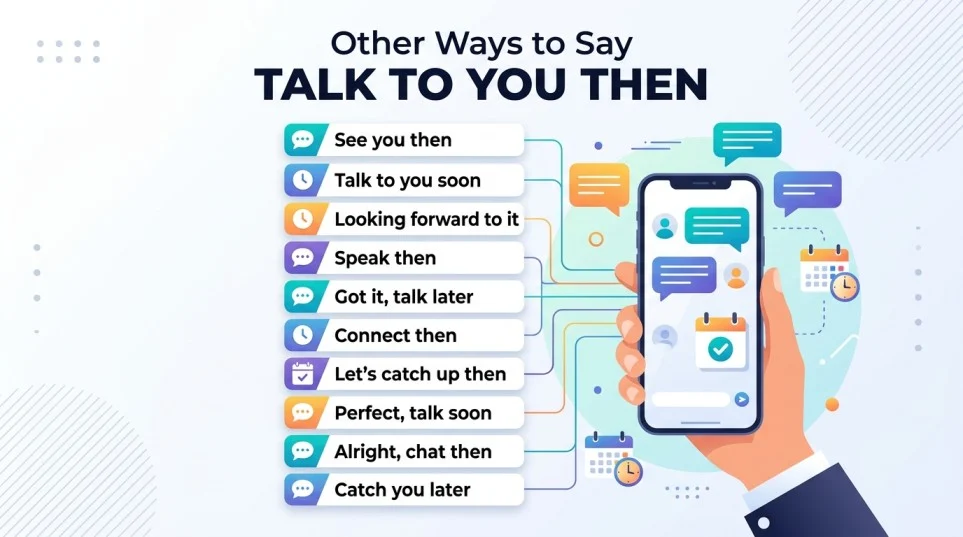
Quick Ans: If you’re looking for other ways to say “talk to you then,” try: Speak to you later, Catch up with you then, We’ll talk at that time, Looking forward to speaking then, Chat with you later. These options help you sound natural, clear, and appropriate in different contexts.
The phrase “talk to you then” is commonly used to confirm a future conversation at a specific or agreed time. It’s simple, polite, and widely understood.
However, using varied expressions can make your communication more engaging and professional. Learning alternatives to talk to you then helps you adapt your tone for casual chats, formal emails, and workplace conversations.
It also improves how you express plans in English with clarity and confidence.
“Clear and varied expressions make your communication more natural and professional.”
Quick Categories Section
Formal Alternatives to “Talk to You Then”
- I will speak with you at that time
- I look forward to speaking with you then
- We will connect at the scheduled time
- I will follow up at that time
Pro Tip: Use these in emails, meetings, and professional settings.
Casual Alternatives
- Talk to you later
- Catch you then
- Chat with you later
- See you then
Pro Tip: Best for friendly conversations and texting.
Professional Alternatives
- I will connect with you then
- Looking forward to our discussion
- Speak with you at the scheduled time
- I will reach out then
Pro Tip: Ideal for workplace communication and scheduling.
Informal Expressions
- Catch you later
- Talk soon
- See you later
- Chat soon
Pro Tip: Use only in relaxed, informal contexts.
“The right phrase sets the tone for smooth and effective communication.”
Common Mistakes Section
- Using overly casual phrases in professional emails
Incorrect: Catch you later
Better: I look forward to speaking with you then - Being unclear about timing
Incorrect: Talk later
Better: Talk to you at 3 PM - Repeating the same phrase too often
Better: Use a variety of alternatives - Using informal tone in formal communication
Incorrect: See ya then
Better: We will connect at the scheduled time - Not confirming the plan clearly
Incorrect: Talk soon
Better: I will speak with you at the agreed time
What Does “Talk to You Then” Mean?
Definition:
It means you will speak with someone at a specific or previously agreed time in the future.
Grammar Note:
It is a future-oriented phrase using implied scheduling.
Example:
Let’s meet at 5 PM—talk to you then.
When to Use This Phrase
- Confirming meetings
- Ending conversations
- Scheduling calls
- Casual chats
Spoken vs Written: Both
Formal vs Informal: Neutral
Is It Professional or Polite to Say “Talk to You Then”?
- Polite? ✔️ Yes
- Professional? ✔️ Acceptable (but better alternatives exist)
Business Example:
Thank you for your time. I will speak with you at the scheduled time.
“Professional communication favors clarity and precision.”
Pros and Cons of Using This Phrase
Pros
- Simple and clear
- Widely understood
- Friendly tone
- Easy to use
Cons
- Can sound repetitive
- Slightly informal
- Lacks variety
- Not ideal for formal writing
Other Ways to Say “Talk to You Then” (With Examples)
These alternatives will help you sound more fluent, confident, and natural in different situations.
Use them according to tone, context, and audience.
1. Speak to you later
Meaning: Talk at a later time
Explanation: Common casual phrase
Example Sentence: I’ll speak to you later today.
Best Use: Daily talk
Worst Use: Formal email
Tone: Casual
Context Variability: casual
2. I will speak with you at that time
Meaning: Confirm future conversation
Explanation: Formal phrasing
Example Sentence: I will speak with you at that time.
Best Use: Business
Worst Use: Casual chat
Tone: Formal
Context Variability: professional
3. Catch you then
Meaning: See or talk at that time
Explanation: Informal friendly phrase
Example Sentence: Catch you then at the meeting.
Best Use: Friends
Worst Use: Formal email
Tone: Informal
Context Variability: casual
4. Looking forward to speaking with you then
Meaning: Positive expectation
Explanation: Professional tone
Example Sentence: Looking forward to speaking with you then.
Best Use: Emails
Worst Use: Slang
Tone: Professional
Context Variability: professional
5. Chat with you later
Meaning: Talk casually later
Explanation: Friendly tone
Example Sentence: I’ll chat with you later.
Best Use: Casual
Worst Use: Business
Tone: Informal
Context Variability: casual
6. I will connect with you then
Meaning: Formal meeting confirmation
Explanation: Corporate phrase
Example Sentence: I will connect with you then.
Best Use: Workplace
Worst Use: Casual
Tone: Professional
Context Variability: professional
7. See you then
Meaning: Meet or talk at that time
Explanation: Very common phrase
Example Sentence: See you then at 4 PM.
Best Use: General
Worst Use: Formal writing
Tone: Neutral
Context Variability: general
8. I will reach out then
Meaning: Contact at that time
Explanation: Professional communication
Example Sentence: I will reach out then.
Best Use: Work
Worst Use: Casual chat
Tone: Professional
Context Variability: professional
9. Talk to you later
Meaning: Speak later
Explanation: Everyday phrase
Example Sentence: Talk to you later!
Best Use: Friends
Worst Use: Formal
Tone: Casual
Context Variability: casual
10. We’ll talk at that time
Meaning: Confirm schedule
Explanation: Neutral phrasing
Example Sentence: We’ll talk at that time.
Best Use: General
Worst Use: Slang
Tone: Neutral
Context Variability: general
11. I will follow up then
Meaning: Continue discussion later
Explanation: Professional phrase
Example Sentence: I will follow up then.
Best Use: Business
Worst Use: Casual
Tone: Formal
12. Catch up with you then
Meaning: Talk later
Example Sentence: I’ll catch up with you then.
Best Use: Friendly
Worst Use: Formal
Tone: Casual
13. Speak soon
Meaning: Talk shortly
Example Sentence: Speak soon.
Best Use: Casual
Worst Use: Formal
Tone: Informal
14. I will get in touch then
Meaning: Contact later
Example Sentence: I will get in touch then.
Best Use: Work
Worst Use: Slang
Tone: Professional
15. Let’s talk at that time
Meaning: Plan conversation
Example Sentence: Let’s talk at that time.
Best Use: Neutral
Worst Use: Formal
Tone: Neutral
16. I will call you then
Meaning: Phone later
Example Sentence: I will call you then.
Best Use: General
Worst Use: Email
Tone: Neutral
17. We’ll connect then
Meaning: Meet or talk
Example Sentence: We’ll connect then.
Best Use: Work
Worst Use: Casual slang
Tone: Professional
18. I will check in then
Meaning: Follow-up later
Example Sentence: I will check in then.
Best Use: Work
Worst Use: Casual
Tone: Professional
19. Talk at that time
Meaning: Speak later
Example Sentence: We’ll talk at that time.
Best Use: Neutral
Worst Use: Formal
Tone: Neutral
20. I’ll message you then
Meaning: Send message later
Example Sentence: I’ll message you then.
Best Use: Casual
Worst Use: Business
Tone: Informal
21. Let’s catch up then
Meaning: Meet or talk later
Example Sentence: Let’s catch up then.
Best Use: Friends
Worst Use: Formal
Tone: Casual
22. I’ll follow up with you then
Meaning: Continue later
Example Sentence: I’ll follow up with you then.
Best Use: Work
Worst Use: Casual
Tone: Professional
23. Speak with you at the scheduled time
Meaning: Formal meeting
Example Sentence: Speak with you at the scheduled time.
Best Use: Business
Worst Use: Casual
Tone: Formal
24. I’ll contact you then
Meaning: Reach out later
Example Sentence: I’ll contact you then.
Best Use: Work
Worst Use: Slang
Tone: Professional
25. Let’s reconnect then
Meaning: Resume communication
Example Sentence: Let’s reconnect then.
Best Use: Work
Worst Use: Casual slang
Tone: Professional
26. I’ll talk with you at that time
Meaning: Confirm plan
Example Sentence: I’ll talk with you at that time.
Best Use: Neutral
Worst Use: Informal
Tone: Neutral
27. We’ll discuss this then
Meaning: Continue later
Example Sentence: We’ll discuss this then.
Best Use: Work
Worst Use: Casual
Tone: Professional
28. I’ll be in touch then
Meaning: Contact later
Example Sentence: I’ll be in touch then.
Best Use: Work
Worst Use: Casual
Tone: Professional
29. Let’s speak then
Meaning: Talk later
Example Sentence: Let’s speak then.
Best Use: Neutral
Worst Use: Slang
Tone: Neutral
30. I’ll catch you at that time
Meaning: Meet/talk later
Example Sentence: I’ll catch you at that time.
Best Use: Casual
Worst Use: Formal
Tone: Informal
“Small changes in phrasing can make your English sound more natural and confident.”
Mini Quiz / Self-Check
1. Which is most formal?
A. Catch you later
B. I will connect with you then
C. Talk soon
Answer: B
2. Which is most casual?
A. I will follow up then
B. Catch you then
C. Speak with you at the scheduled time
Answer: B
3. Best for workplace email?
A. Talk soon
B. I will reach out then
C. Catch ya
Answer: B
Comparison Table: Top Alternatives
| Phrase | Tone | Best Use |
|---|---|---|
| I will speak with you at that time | Formal | Business |
| Speak to you later | Casual | Daily talk |
| Looking forward to speaking then | Professional | |
| Catch you then | Informal | Friends |
| I will connect with you then | Professional | Work |
| See you then | Neutral | General |
| I will reach out then | Professional | Workplace |
| Talk to you later | Casual | Chat |
| I will follow up then | Formal | Business |
| I’ll be in touch then | Professional | Work |
FAQs
1. What are other ways to say talk to you then?
You can say Speak to you later, I will connect with you then, or I’ll be in touch then.
2. Is “talk to you then” professional?
Yes, but more formal alternatives are better in business communication.
3. What is the best formal alternative?
I will speak with you at the scheduled time.
4. Can I use casual phrases at work?
It’s better to avoid casual phrases in professional emails.
5. Why learn alternatives?
It improves fluency, tone, and communication clarity.
Conclusion
Learning other ways to say talk to you then helps you communicate more clearly and professionally in different situations. It also improves your ability to adjust tone depending on context.
Practice these phrases regularly to sound more natural and confident in English.
See also: Other Ways to Say “See You Later”
See also: Professional Email Closing Phrases
CTA: Try using 3 new alternatives in your next conversation or email.
Discover More:-
- Other Ways to Say Thank You for Your Cooperation (40 Examples)
- Other Ways to Say I’m Proud of You (30+ Examples)