
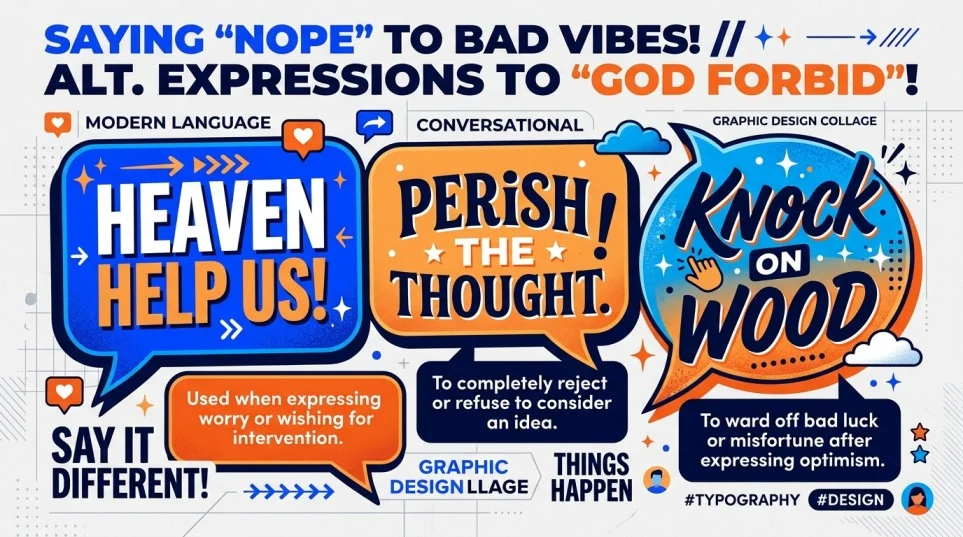
Quick Ans: Looking for other ways to say God forbid? Whether you’re texting friends, writing professionally, joking online, or expressing concern in everyday conversations, there are plenty of alternatives that sound natural and fit different situations.
Top alternatives include: Heaven forbid, Let’s hope not, I sure hope not, Perish the thought, Hopefully not
We’ve all had those moments when someone mentions a worst-case scenario and your immediate reaction is, “God forbid.” Maybe a friend jokes about missing a flight, a coworker mentions a project disaster, or someone casually brings up an unlucky possibility. It’s one of those phrases people use almost automatically to express hope that something bad never happens.
But repeating the same expression every time can start to feel a little stale. That’s why knowing other ways to say God forbid can make your conversations sound fresher, more natural, and better suited to different situations. Some alternatives are formal, some are funny, some are dramatic, and others fit perfectly into casual texting.
Whether you’re chatting in DMs, posting on social media, talking with friends, or writing professionally, this list gives you plenty of ready-to-use alternatives that sound authentic and relatable.
Casual Alternatives
Let’s hope not.
Example: When discussing a possible inconvenience with friends.
Meaning: Expresses hope that something negative won’t happen.
Hopefully not.
Example: During everyday conversations.
Meaning: Politely wishes against an outcome.
I sure hope not.
Example: When reacting to bad news possibilities.
Meaning: Shows concern and optimism.
Not if we can help it.
Example: Discussing preventable problems.
Meaning: Suggests taking action to avoid something.
That would be awful.
Example: Reacting to a negative scenario.
Meaning: Highlights how undesirable it would be.
Let’s not even think about that.
Example: Casual discussions about bad possibilities.
Meaning: Rejects the idea entirely.
Fingers crossed that doesn’t happen.
Example: Before uncertain events.
Meaning: Expresses hope for a positive outcome.
I’d rather not imagine that.
Example: Responding to unpleasant hypotheticals.
Meaning: Shows discomfort with the idea.
Please no.
Example: Quick texting response.
Meaning: Strongly hopes against something.
Let’s avoid that outcome.
Example: Planning conversations.
Meaning: Focuses on prevention.
That would not be ideal.
Example: Casual workplace discussions.
Meaning: Politely downplays concern.
Here’s hoping.
Example: Optimistic situations.
Meaning: Expresses hopeful anticipation.
I wouldn’t wish that.
Example: Serious conversations.
Meaning: Emphasizes how bad something would be.
That sounds terrible.
Example: Discussing possible setbacks.
Meaning: Shows clear disapproval.
Hopefully it never comes to that.
Example: Talking about worst-case scenarios.
Meaning: Wishes to avoid an outcome.
Professional Alternatives
Let’s hope that scenario doesn’t arise.
Example: Business planning meetings.
Meaning: Professional optimism.
We certainly hope not.
Example: Formal discussions.
Meaning: Polite disagreement with a possibility.
That outcome would be unfortunate.
Example: Workplace conversations.
Meaning: Formal expression of concern.
We should aim to avoid that.
Example: Project management discussions.
Meaning: Focuses on prevention.
Ideally, that won’t happen.
Example: Strategic planning sessions.
Meaning: States a preferred outcome.
Let’s work to prevent that.
Example: Team meetings.
Meaning: Encourages proactive action.
That would not be desirable.
Example: Formal reports.
Meaning: Professional concern.
Let’s hope circumstances remain favorable.
Example: Business updates.
Meaning: Positive anticipation.
That would present challenges.
Example: Executive discussions.
Meaning: Formal acknowledgment of risks.
We’re optimistic that won’t occur.
Example: Corporate communication.
Meaning: Positive confidence.
Let’s avoid that possibility.
Example: Risk assessment meetings.
Meaning: Focuses on prevention.
That would be less than ideal.
Example: Workplace conversations.
Meaning: Soft professional concern.
Hopefully the situation remains stable.
Example: Industry discussions.
Meaning: Wishes for continuity.
Let’s keep that from happening.
Example: Team collaboration.
Meaning: Action-oriented response.
We anticipate a better outcome.
Example: Formal planning sessions.
Meaning: Optimistic expectation.
Funny Alternatives
Don’t put that energy into the universe.
Example: When someone jokes about bad luck.
Meaning: Playfully rejects negativity.
Delete that thought immediately.
Example: Casual texting.
Meaning: Humorous rejection of an idea.
Take that back right now.
Example: Friends discussing bad possibilities.
Meaning: Playful protest.
Why would you even say that?
Example: Reacting to unlucky comments.
Meaning: Humorous disbelief.
You just jinxed us.
Example: Group conversations.
Meaning: Blames someone jokingly.
Absolutely not.
Example: Quick reactions.
Meaning: Strong rejection.
Let’s pretend you never said that.
Example: Friendly banter.
Meaning: Humorous dismissal.
Don’t manifest that.
Example: Social media conversations.
Meaning: Rejects negativity humorously.
The universe did not need to hear that.
Example: Casual jokes.
Meaning: Playfully superstitious.
Unsubscribe from that idea.
Example: Internet-savvy conversations.
Meaning: Rejects the possibility.
Respectfully, no.
Example: Meme-style humor.
Meaning: Politely disagrees.
That thought needs a timeout.
Example: Lighthearted discussions.
Meaning: Playful rejection.
Hard pass on that scenario.
Example: Casual conversations.
Meaning: Strongly dislikes the possibility.
We don’t speak that into existence.
Example: Trendy online conversations.
Meaning: Rejects negativity.
Not on my watch.
Example: Humorous confidence.
Meaning: Determined prevention.
Dramatic Alternatives
Perish the thought.
Example: Formal or dramatic reactions.
Meaning: Strong rejection of an idea.
Heaven forbid.
Example: Traditional conversations.
Meaning: Classic alternative.
May that never happen.
Example: Serious discussions.
Meaning: Strong hope against an outcome.
What a dreadful thought.
Example: Dramatic conversations.
Meaning: Emphasizes concern.
Let’s pray it never comes to pass.
Example: Emotional discussions.
Meaning: Deep hope against an event.
That would be a tragedy.
Example: Serious scenarios.
Meaning: Highlights severity.
May fate be kinder than that.
Example: Poetic conversations.
Meaning: Wishes for a better outcome.
Surely not.
Example: Dramatic disbelief.
Meaning: Rejects a possibility.
May we be spared.
Example: Dramatic storytelling.
Meaning: Strong hope against something.
Let’s not tempt fate.
Example: Superstitious conversations.
Meaning: Avoids bad luck.
What an unfortunate possibility.
Example: Serious discussions.
Meaning: Expresses concern.
May fortune smile upon us instead.
Example: Dramatic optimism.
Meaning: Wishes for good outcomes.
Let’s hope destiny has other plans.
Example: Emotional moments.
Meaning: Hopes for a better future.
That would be heartbreaking.
Example: Personal discussions.
Meaning: Expresses emotional concern.
Let’s pray for better circumstances.
Example: Serious situations.
Meaning: Seeks positive outcomes.
Polite Alternatives
I sincerely hope not.
Example: Respectful conversations.
Meaning: Polite disagreement.
Hopefully that won’t happen.
Example: Everyday discussions.
Meaning: Courteous optimism.
Let’s hope for the best.
Example: Uncertain situations.
Meaning: Positive outlook.
That would be unfortunate.
Example: Formal conversations.
Meaning: Polite concern.
I would certainly hope not.
Example: Professional settings.
Meaning: Respectful rejection.
Let’s remain optimistic.
Example: Encouraging discussions.
Meaning: Promotes positivity.
Hopefully things work out differently.
Example: Problem-solving conversations.
Meaning: Wishes for better outcomes.
I trust that won’t be the case.
Example: Formal discussions.
Meaning: Confident optimism.
Let’s stay positive.
Example: Friendly conversations.
Meaning: Encourages hope.
I believe things will be fine.
Example: Supportive moments.
Meaning: Reassurance.
Hopefully circumstances improve.
Example: Challenging situations.
Meaning: Wishes for progress.
Let’s keep our fingers crossed.
Example: Waiting situations.
Meaning: Hopeful anticipation.
I remain hopeful.
Example: Serious discussions.
Meaning: Optimistic attitude.
Let’s expect a better outcome.
Example: Planning conversations.
Meaning: Positive expectation.
Hopefully it all works out.
Example: Everyday discussions.
Meaning: General optimism.
Formal Alternatives
May such circumstances never arise.
Example: Formal writing.
Meaning: Strong hope against an event.
Let us hope otherwise.
Example: Professional communication.
Meaning: Polite disagreement.
That would be most unfortunate.
Example: Formal discussions.
Meaning: Serious concern.
One hopes not.
Example: Formal speech.
Meaning: Reserved optimism.
May that outcome be avoided.
Example: Reports and presentations.
Meaning: Prevention-focused concern.
We would certainly prefer otherwise.
Example: Corporate communication.
Meaning: Formal preference.
Let us trust that will not occur.
Example: Professional discussions.
Meaning: Optimistic confidence.
Such an outcome would be regrettable.
Example: Formal analysis.
Meaning: Serious concern.
May events unfold more favorably.
Example: Formal writing.
Meaning: Positive hope.
That possibility is concerning.
Example: Business discussions.
Meaning: Professional caution.
One would hope for a different result.
Example: Formal commentary.
Meaning: Preference for a better outcome.
Let us remain optimistic.
Example: Formal meetings.
Meaning: Positive outlook.
Hopefully that situation can be avoided.
Example: Risk management.
Meaning: Preventive concern.
We anticipate a more favorable outcome.
Example: Strategic planning.
Meaning: Optimistic expectation.
Let us proceed with confidence.
Example: Professional communication.
Meaning: Encourages positivity.
FAQs
What does “God forbid” mean?
It is an expression used to hope that something bad, unfortunate, or undesirable does not happen.
Is “Heaven forbid” the same as “God forbid”?
Yes. “Heaven forbid” is one of the most common alternatives and carries nearly the same meaning.
Can I use these alternatives in professional settings?
Absolutely. Phrases like “Let’s hope not” or “That outcome would be unfortunate” work well in professional communication.
Are funny alternatives appropriate?
Yes, especially with friends, family, or on social media where a lighter tone fits the conversation.
What is the most formal alternative?
“May such circumstances never arise” and “One hopes not” are among the most formal options.
CONCLUSION
The phrase “God forbid” is incredibly common, but having a variety of alternatives can make your conversations sound more natural, expressive, and memorable. Whether you need something professional for work, funny for a group chat, dramatic for storytelling, or casual for everyday conversations, there is an option that fits perfectly.
The best expressions are the ones that match your personality and the situation. Save your favorites, try a few new ones in conversation, and keep this list handy whenever you want a fresh way to express hope that something unfortunate never happens.
Discover More:-
- 250+ Other Ways to Say Appreciate for Texts, Emails, Work, and Everyday Conversations
- 200+ Other Ways to Say Pretty That Sound More Creative and Attractive