
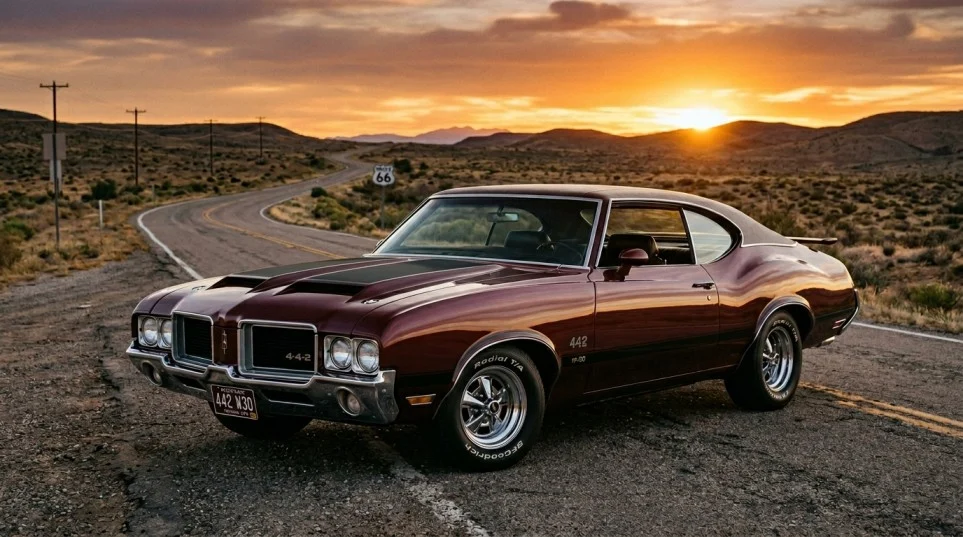
The Oldsmobile 442 remains one of the most respected names in American automotive history. Even decades after production ended, muscle car enthusiasts still debate its engines, performance packages, and legendary street reputation. Yet one question continues to appear more than any other:
What does Oldsmobile 442 mean?
At first glance, the numbers seem random. They look more like a racing code than the name of a classic car. However, the meaning behind the Oldsmobile 442 tells an important story about the golden age of Detroit muscle.
The original Oldsmobile 442 meaning referred to three performance features:
- 4-barrel carburetor
- 4-speed manual transmission
- Dual exhausts
That simple combination transformed an ordinary midsize Oldsmobile into a serious high-performance machine. During the 1960s muscle car era, those numbers instantly signaled power, speed, and street credibility.
However, the story became more complicated as the years passed. Engine choices changed. Automatic transmissions arrived. Performance packages evolved. By the early 1970s, the original definition no longer matched every car wearing the 442 badge.
Still, the name stuck.
Today, the Oldsmobile 442 stands beside legends like the Pontiac GTO, Chevrolet Chevelle SS, and Dodge Charger. It represents a time when Detroit built loud V8-powered machines with massive torque and unapologetic styling.
This guide explains the complete Oldsmobile 442 history, the real meaning of the badge, engine specifications, horsepower figures, collector value, and why this classic GM muscle car still commands attention today.
What Does Oldsmobile 442 Mean?
The original Oldsmobile 442 stand for formula was surprisingly straightforward.
The Original Oldsmobile 442 Definition
When Oldsmobile introduced the 442 package in 1964, the numbers represented the car’s main performance features:
| Number | Meaning |
|---|---|
| First 4 | 4-barrel carburetor |
| Second 4 | 4-speed manual transmission |
| 2 | Dual exhaust system |
That setup created a serious performance package during the muscle car era.
A 4-barrel carburetor delivered more fuel and air into the engine than smaller carburetors. More airflow meant stronger acceleration and increased horsepower.
The 4-speed transmission gave drivers tighter control over engine power. Manual shifting also improved performance on drag strips and back roads.
Finally, the dual exhaust system helped the engine breathe better. It reduced exhaust restriction and created the deep V8 rumble muscle car fans still love today.
Together, those upgrades transformed the Oldsmobile Cutlass into a genuine street machine.
Why the Oldsmobile 442 Meaning Changed Later
This is where many people get confused.
The original 4-4-2 formula only accurately described the earliest cars. As Oldsmobile expanded the lineup, the company added automatic transmissions and different engine combinations.
That meant some later 442 models no longer had:
- A 4-speed manual
- Dual exhaust in every configuration
- The exact original setup
By the late 1960s and early 1970s, the 442 Oldsmobile definition evolved from a technical description into a performance brand.
Instead of describing specific parts, the badge began representing:
- High performance
- Big-block V8 power
- Oldsmobile muscle heritage
- Premium GM performance engineering
At that point, “442” became more about identity than literal specifications.
Why Is It Called Oldsmobile 442?
The answer connects directly to the growing muscle car wars of the 1960s.
General Motors divisions competed aggressively against each other during that era. Pontiac had the GTO. Chevrolet offered the Chevelle SS. Buick built the GS models.
Oldsmobile needed its own performance image.
Instead of creating a completely separate car, Oldsmobile engineers upgraded the midsize Cutlass platform with stronger engines, performance suspension parts, manual transmissions, and dual exhaust systems.
The result became the Oldsmobile 442 package.
The name sounded mechanical, fast, and technical. That mattered during the muscle car era because buyers wanted performance credibility.
The Birth of the Oldsmobile 442
The arrival of the 442 did not happen by accident. It emerged during one of the most competitive periods in American automotive history.
The Rise of the Muscle Car Era
During the early 1960s, young American drivers wanted affordable cars with serious horsepower.
Manufacturers quickly noticed the trend.
Detroit automakers began stuffing large V8 engines into midsize coupes and sedans. These lighter platforms accelerated harder than many full-size performance cars.
The formula worked brilliantly.
Muscle cars became symbols of freedom, rebellion, and raw American engineering.
Some famous early rivals included:
- Pontiac GTO
- Chevrolet Chevelle SS
- Ford Fairlane Thunderbolt
- Plymouth Road Runner
- Dodge Coronet
Oldsmobile could not afford to ignore the growing market.
The First Oldsmobile 442 in 1964
The first official Oldsmobile 442 debuted in 1964.
Oldsmobile based the car on the F-85 and Cutlass platform. Engineers equipped it with a high-compression V8 engine and performance upgrades aimed directly at Pontiac’s GTO.
Key early features included:
- Heavy-duty suspension
- Larger engine components
- Dual exhaust
- Manual floor shifter
- Performance tuning
The original engine displaced 330 cubic inches and produced roughly 310 horsepower. That number was impressive for the era.
The car immediately attracted attention among performance enthusiasts.
Why Buyers Loved the Early 442
The Oldsmobile 442 developed a unique reputation.
Unlike some flashy muscle cars, the 442 looked slightly more refined and upscale. It combined luxury touches with brutal acceleration.
Drivers appreciated the balance.
The car offered:
- Strong torque
- Comfortable interiors
- Excellent highway performance
- Durable V8 engines
- Sleeper muscle car styling
Many enthusiasts considered it a gentleman’s muscle car.
That reputation still follows the car today.
Oldsmobile 442 History Through the Generations
The Oldsmobile 442 changed dramatically during its production life. Some years focused on raw power while others emphasized styling and luxury.
Understanding those generations helps explain why collectors value certain models so highly.
1964–1967 Oldsmobile 442 Models
The first-generation cars established the 442 identity.
Early Design Philosophy
Oldsmobile engineers avoided excessive styling gimmicks.
Instead, they focused on engineering improvements:
- Stronger suspensions
- Better handling
- Larger sway bars
- Upgraded brakes
- Performance gearing
The cars looked clean and muscular without appearing cartoonish.
That subtle approach appealed to mature buyers who wanted speed without excessive attention.
Engine and Performance Upgrades
Horsepower steadily increased during these years.
Important developments included:
| Year | Engine | Horsepower |
|---|---|---|
| 1964 | 330 V8 | 310 HP |
| 1965 | 400 V8 introduced | 345 HP |
| 1966 | Improved tuning | 350 HP |
| 1967 | Enhanced torque output | 350+ HP |
The shift to the larger 400 cubic inch V8 transformed the car’s performance reputation.
Quarter-mile times dropped significantly.
Street racers began taking the 442 seriously.
The Move Toward True Muscle Car Status
By 1967, the Oldsmobile 442 was no longer simply a performance trim package.
It had become a recognized muscle car competitor.
Automotive magazines praised the car for:
- Strong acceleration
- Smooth power delivery
- Excellent highway manners
- Premium cabin quality
The 442 started developing loyal fans across the United States.
1968–1972: The Golden Age of the Oldsmobile 442
Most enthusiasts consider this period the absolute peak of the Oldsmobile 442.
Everything improved.
The styling became more aggressive. Engines became larger. Performance exploded.
These years created the legend.
Redesigned GM A-Body Platform
In 1968, General Motors redesigned its midsize A-body cars.
The new platform gave the 442:
- Wider stance
- Lower appearance
- Curvier body lines
- Improved weight distribution
- Better road presence
The styling looked muscular without becoming bulky.
Many collectors still consider the 1970 Oldsmobile 442 one of the most beautiful muscle cars ever built.
The Legendary Rocket 455 Engine
The introduction of the Rocket 455 V8 changed everything.
This engine produced enormous torque numbers that made the 442 terrifyingly quick in straight-line racing.
Typical 1970 specifications included:
| Specification | Figure |
|---|---|
| Engine Size | 455 cubic inches |
| Horsepower | 365 HP |
| Torque | 500 lb-ft |
| Layout | OHV V8 |
| Fuel System | 4-barrel carburetor |
The torque figure mattered more than horsepower.
The 455 delivered instant acceleration from low RPMs. Drivers described the feeling like “being pushed by a freight train.”
Even today, 500 lb-ft remains impressive.
Why the 455 Became Famous
Unlike some high-revving muscle car engines, the Rocket 455 specialized in brutal low-end torque.
That made the car exceptionally fast in real-world driving.
Benefits included:
- Immediate throttle response
- Strong highway passing power
- Excellent drag strip launches
- Effortless cruising
The engine also produced a distinctive exhaust sound.
Deep. Aggressive. Unmistakably American.
The W-30 Package Explained
The W-30 package elevated the Oldsmobile 442 into elite territory.
This option package added serious performance upgrades, including:
- Functional ram air induction
- Performance camshaft
- Aluminum intake manifold
- Improved cylinder heads
- Special tuning components
The W-30 models became some of the fastest factory muscle cars of the era.
Collectors now consider them highly desirable.
1970 Oldsmobile 442 W-30 Performance
The 1970 W-30 remains legendary.
Approximate performance figures included:
| Performance Metric | Figure |
|---|---|
| 0-60 MPH | Around 5.5 seconds |
| Quarter Mile | Mid-13-second range |
| Horsepower | 370 HP advertised |
| Torque | Massive low-end output |
Those numbers rivaled many modern sports cars.
Not bad for a full-size American muscle coupe from 1970.
Hurst/Olds Models
Oldsmobile also partnered with Hurst Performance.
The collaboration created special-edition Hurst/Olds vehicles featuring:
- Unique paint schemes
- Performance upgrades
- Distinctive shifters
- Limited production runs
These cars blended luxury and muscle perfectly.
Today, original Hurst/Olds models command serious auction prices.
1973–1980: The Decline of the Muscle Car Era
The muscle car world changed dramatically during the 1970s.
Government regulations, rising insurance costs, and fuel shortages forced automakers to rethink performance cars.
The Oldsmobile 442 changed with the times.
The Oil Crisis Changed Everything
The 1973 oil crisis hurt every performance brand.
Suddenly, giant V8 engines looked impractical.
Fuel prices increased sharply.
Insurance companies also punished young muscle car buyers with expensive premiums.
Manufacturers responded by reducing engine compression and horsepower.
Emissions Regulations Reduced Performance
Federal emissions laws also weakened many classic engines.
Manufacturers lowered compression ratios to meet emissions standards.
That reduced horsepower dramatically.
Many later 442 models looked fast but lacked the brutal acceleration of earlier versions.
The 442 Became More Appearance-Oriented
During the late 1970s, the 442 evolved into more of a styling and handling package.
Performance remained respectable, though it no longer dominated the streets like earlier models.
Features often included:
- Sport suspension
- Unique decals
- Bucket seats
- Rally wheels
- Appearance trim
The era disappointed some hardcore enthusiasts.
However, these cars still preserved the 442 name during difficult years for performance vehicles.
1985–1987: The Final Oldsmobile 442 Revival
Oldsmobile revived the 442 one last time during the 1980s.
The final generation used the rear-wheel-drive G-body platform shared with several GM performance cars.
Features of the Final 442
Important characteristics included:
| Feature | Details |
|---|---|
| Engine | 307 cubic inch V8 |
| Drivetrain | Rear-wheel drive |
| Transmission | Automatic |
| Platform | GM G-body |
| Production Years | 1985–1987 |
Although less powerful than the original muscle-era cars, these models gained loyal fans.
Why Enthusiasts Still Love the Final 442
The last-generation cars remain popular because they represent the end of traditional rear-wheel-drive Oldsmobile performance.
Collectors appreciate:
- Lightweight G-body handling
- Classic 1980s styling
- Easy modification potential
- Affordable ownership
These cars also became important pieces of GM performance history.
What Made the Oldsmobile 442 Special?
Many muscle cars existed during the 1960s and 1970s. Yet the 442 developed a personality entirely its own.
The Rocket V8 Engine Reputation
Oldsmobile engines earned enormous respect.
The Rocket V8 lineup became known for:
- Durability
- Massive torque
- Smooth power delivery
- Strong street performance
Unlike some competitors, Oldsmobile emphasized refined engineering alongside horsepower.
Drivers noticed the difference.
A Muscle Car With Luxury
The 442 combined performance with comfort unusually well.
Compared to many rivals, buyers often received:
- Better interior materials
- Quieter highway cruising
- Smoother ride quality
- More upscale styling
That blend attracted older buyers who wanted performance without sacrificing comfort.
Sleeper Muscle Car Image
The Oldsmobile 442 never screamed for attention like some competitors.
That helped create its sleeper reputation.
Many street racers underestimated the car until the light turned green.
Then the Rocket V8 spoke loudly.
Oldsmobile 442 Specs by Era
The specifications changed significantly throughout production.
Here’s a simplified overview.
Oldsmobile 442 Engine Specs Table
| Year Range | Engine | Horsepower | Torque |
|---|---|---|---|
| 1964 | 330 V8 | 310 HP | 355 lb-ft |
| 1965–1967 | 400 V8 | 345–360 HP | 440 lb-ft |
| 1968–1970 | 400/455 V8 | 350–370 HP | Up to 500 lb-ft |
| 1971–1972 | Lower compression 455 | Reduced output | Strong torque remained |
| 1985–1987 | 307 V8 | Around 180 HP | Moderate torque |
Transmission Options
Depending on the year, buyers could choose:
- 4-speed manual
- 3-speed manual
- Turbo Hydra-Matic automatic
- Performance gear ratios
Manual transmission models remain especially desirable among collectors.
Oldsmobile 442 Horsepower and Real Performance
Horsepower figures from the muscle car era can sometimes confuse modern readers.
Manufacturers used different measurement systems during that period.
Still, the Oldsmobile 442 delivered genuine performance.
Real-World Acceleration
Many high-performance 442 models achieved:
- 0-60 MPH in under 6 seconds
- Quarter-mile times in the 13-second range
- Top speeds exceeding 120 MPH
Those numbers were extremely fast during the late 1960s and early 1970s.
Torque Was the Secret Weapon
The Oldsmobile 442 excelled because of torque.
Torque determines how forcefully a car accelerates from low speeds.
The Rocket 455 generated enormous pulling power.
Drivers barely needed high RPMs to feel serious acceleration.
That gave the 442 excellent street manners.
Oldsmobile 442 vs Other GM Muscle Cars
The 442 competed directly against several legendary GM models.
Each had unique strengths.
Oldsmobile 442 vs Pontiac GTO
The Pontiac GTO often received more publicity.
However, the 442 offered advantages including:
- Smoother ride quality
- More upscale interior
- Stronger low-end torque
- Better highway comfort
The GTO leaned more toward aggressive youth culture while the 442 balanced muscle and refinement.
Oldsmobile 442 vs Chevelle SS
The Chevrolet Chevelle SS became extremely popular because of Chevrolet’s massive marketing power.
Still, many enthusiasts respected the Oldsmobile’s engineering quality.
The 442 often felt more mature and composed on long drives.
Oldsmobile 442 vs Buick GS
The Buick GS shared similarities with the 442.
Both emphasized:
- Torque-heavy engines
- Comfortable interiors
- Luxury muscle identity
Today, both cars remain underrated compared to mainstream muscle car icons.
Why the 1970 Oldsmobile 442 Is So Valuable
Collectors aggressively pursue 1970 models for several reasons.
Peak Styling
The 1970 body design achieved near-perfect proportions.
The car looked muscular from every angle.
Important styling features included:
- Twin hood scoops
- Aggressive grille
- Wide stance
- Clean body lines
Many enthusiasts consider it one of the best-looking GM muscle cars ever made.
Peak Engine Performance
The 1970 Rocket 455 represented the peak of Oldsmobile muscle engineering.
Horsepower remained strong before emissions regulations reduced output.
That combination of styling and performance created massive collector demand.
Rare W-30 Cars
Authentic W-30 cars remain extremely valuable today.
Rare examples can sell for well into six figures depending on condition and originality.
Collectors especially value:
- Matching numbers engines
- Original paint codes
- Factory documentation
- Low production combinations
Oldsmobile 442 Restoration Culture
The restoration community surrounding the 442 remains active today.
Enthusiasts continue rebuilding these cars across the United States.
Why Restorers Love the 442
Several factors make restoration appealing:
- Strong aftermarket support
- Available reproduction parts
- Durable engine designs
- Strong collector demand
Many owners restore cars to factory specifications while others build modified restomods.
Common Restoration Challenges
Despite strong parts support, restorers still face issues including:
- Rust repair
- Finding original trim pieces
- Correct engine verification
- Matching factory paint colors
Authenticity matters greatly in collector markets.
Rare Oldsmobile 442 Models
Some versions remain especially difficult to find.
Most Desirable Variants
Highly collectible models include:
- 1970 W-30 convertibles
- Hurst/Olds editions
- 4-speed manual cars
- Special-order combinations
- Low-production color packages
These cars frequently appear at major collector auctions.
Common Myths About the Oldsmobile 442
Several misconceptions continue circulating among enthusiasts.
Myth: Every 442 Had a 4-Speed Manual
Not true.
Later models offered automatic transmissions.
The original meaning eventually became symbolic rather than literal.
Myth: All 442 Models Were Extremely Fast
Performance varied dramatically by year.
Early 1970s emissions regulations reduced horsepower significantly.
Some later models focused more on appearance and comfort.
Myth: The 442 Was Just a Trim Package
The answer depends on the year.
Initially, the 442 started as a performance package. However, it eventually evolved into a standalone performance model with its own identity.
Why the Oldsmobile 442 Still Matters Today
The Oldsmobile brand disappeared years ago, yet the 442 continues attracting new fans.
That says a lot about the car’s impact.
It Represents the Golden Age of Detroit
The 442 symbolizes a unique era when American manufacturers built outrageous V8-powered machines with minimal restrictions.
The cars were loud, powerful, and unapologetically bold.
Modern vehicles rarely capture that same raw personality.
Younger Collectors Are Discovering the 442
Prices for famous models like the Dodge Charger and Pontiac GTO skyrocketed in recent years.
That pushed many younger collectors toward underrated alternatives like the Oldsmobile 442.
Buyers appreciate:
- Unique styling
- Strong performance history
- Lower prices compared to some rivals
- Distinctive identity
The Exhaust Sound Still Turns Heads
Even people unfamiliar with muscle cars recognize the sound of a healthy big-block V8.
A properly tuned Oldsmobile 442 delivers a deep mechanical roar that modern turbocharged engines rarely replicate.
The experience feels visceral and alive.
The Oldsmobile Brand Legacy
Oldsmobile itself played a major role in automotive history.
Founded in the late 1800s, the company became one of America’s oldest automobile manufacturers.
Oldsmobile introduced important innovations throughout its existence, including:
- Early automatic transmissions
- Advanced V8 development
- High-performance engineering
- Luxury-oriented muscle cars
The 442 became one of the company’s defining achievements.
Interesting Facts About the Oldsmobile 442
Quick Facts Table
| Fact | Details |
|---|---|
| First Production Year | 1964 |
| Most Famous Engine | Rocket 455 V8 |
| Peak Torque | Around 500 lb-ft |
| Most Desirable Year | 1970 |
| Parent Company | General Motors |
| Platform | GM A-body |
| Famous Package | W-30 |
| Final Production Year | 1987 |
Why Muscle Car Enthusiasts Respect the 442
Hardcore enthusiasts appreciate authenticity.
The 442 earned respect because it delivered genuine performance instead of relying only on marketing hype.
The car combined:
- Serious engineering
- Real horsepower
- Comfortable driving manners
- Durable V8 engines
That formula created lasting admiration.
Frequently Asked Questions About Oldsmobile 442 Meaning
What does Oldsmobile 442 mean?
The original Oldsmobile 442 meaning referred to a 4-barrel carburetor, 4-speed manual transmission, and dual exhaust system.
What does Oldsmobile 442 stand for?
The Oldsmobile 442 stand for formula represented the car’s key performance features during its early years.
Why is it called Oldsmobile 442?
Oldsmobile used the name to identify its high-performance muscle car package designed to compete with rivals like the Pontiac GTO.
What is a 442 Oldsmobile?
A 442 Oldsmobile is a high-performance version of the Oldsmobile Cutlass and related midsize GM platforms produced during the muscle car era.
Was the Oldsmobile 442 fast?
Yes. High-performance versions like the 1970 W-30 delivered excellent acceleration and quarter-mile performance for their era.
What engine did the Oldsmobile 442 use?
Different engines appeared over the years including the 330, 400, and legendary Rocket 455 V8.
Which Oldsmobile 442 is most valuable?
The 1970 Oldsmobile 442 W-30 convertible remains one of the rarest and most valuable versions.
Is the Oldsmobile 442 rare?
Certain versions are extremely rare today, especially factory-correct W-30 and Hurst/Olds models.
Final Thoughts on the Oldsmobile 442 Meaning
The Oldsmobile 442 meaning started as a simple performance formula:
- 4-barrel carburetor
- 4-speed transmission
- Dual exhaust
However, the badge eventually became much larger than those numbers.
The 442 evolved into a symbol of American muscle car engineering during Detroit’s most exciting era. It combined torque-heavy Rocket V8 engines with upscale comfort and aggressive styling. That combination helped it stand apart from competitors.
Even today, the Oldsmobile 442 remains one of the most respected classic GM muscle cars ever built.
Its reputation continues growing among collectors, restorers, and younger enthusiasts discovering vintage performance machines for the first time.
The numbers may look simple.
Yet behind them sits one of the greatest stories in American automotive history.