
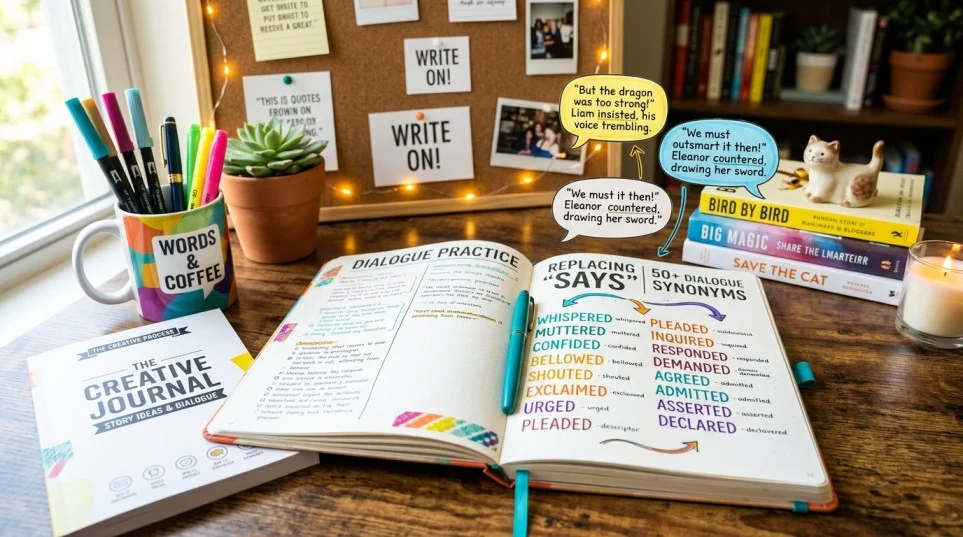
Quick Ans: Looking for better alternatives to “says” in writing? Swapping it out can make dialogue feel more emotional, descriptive, and engaging. Whether you’re writing a novel, blog post, essay, script, or social media story, the right word can instantly strengthen your message.
Top alternatives: replied, explained, whispered, announced, remarked
If you’ve ever written dialogue and found yourself typing “he says” or “she says” for the tenth time in a row, you’re definitely not alone. Whether you’re drafting a novel, crafting a short story, writing fan fiction, working on a school assignment, or even creating social media content, repetitive dialogue tags can make your writing feel flat.
That’s where better alternatives come in. Knowing other ways to say says in writing helps you add emotion, personality, and context without overexplaining. A character can whisper, joke, insist, confess, or announce, and each choice tells readers something extra.
The good news? You don’t need a huge vocabulary to sound like a pro. This guide gives you hundreds of ready-to-use alternatives categorized by tone and situation, making it easy to find the perfect word whenever “says” starts feeling overused.
Common Alternatives To Says
Replies
Example: Useful when a character is answering a question.
Meaning: Shows a direct response to someone else.
Responds
Example: Works well in formal or casual dialogue.
Meaning: Indicates a reaction or answer.
Remarks
Example: Ideal for casual observations.
Meaning: Suggests a brief comment.
States
Example: Often used in essays and reports.
Meaning: Expresses something clearly and directly.
Mentions
Example: Helpful when introducing information casually.
Meaning: Refers to something without much emphasis.
Explains
Example: Great when providing details.
Meaning: Clarifies or elaborates on something.
Adds
Example: Useful when continuing a thought.
Meaning: Contributes extra information.
Notes
Example: Common in articles and journalism.
Meaning: Draws attention to a point.
Comments
Example: Suitable for conversations and discussions.
Meaning: Offers an opinion or observation.
Observes
Example: Used when noticing something important.
Meaning: Points out a detail thoughtfully.
Declares
Example: Fits bold or confident statements.
Meaning: Announces something firmly.
Announces
Example: Perfect for sharing news.
Meaning: Makes information public.
Reports
Example: Common in news writing.
Meaning: Relays information or events.
Shares
Example: Popular in blogs and social media.
Meaning: Gives information or personal thoughts.
Expresses
Example: Useful for emotions and opinions.
Meaning: Communicates feelings or ideas.
Formal Ways To Say Says
States
Example: Used in academic papers.
Meaning: Presents information directly.
Indicates
Example: Helpful in professional reports.
Meaning: Points toward a conclusion or fact.
Affirms
Example: Used when confirming information.
Meaning: States something positively.
Maintains
Example: Common in debates.
Meaning: Continues to support a position.
Asserts
Example: Works in persuasive writing.
Meaning: States confidently.
Declares
Example: Suitable for strong claims.
Meaning: Announces firmly.
Reports
Example: Found in journalism.
Meaning: Relays information.
Acknowledges
Example: Useful in professional communication.
Meaning: Recognizes a fact or point.
Confirms
Example: Common in business writing.
Meaning: Verifies information.
Communicates
Example: Professional and versatile.
Meaning: Conveys a message.
Reveals
Example: Used when sharing new information.
Meaning: Makes something known.
Explains
Example: Great for clarification.
Meaning: Provides details.
Clarifies
Example: Helpful in technical writing.
Meaning: Makes something easier to understand.
Highlights
Example: Useful in reports and articles.
Meaning: Emphasizes an important point.
Emphasizes
Example: Ideal for key arguments.
Meaning: Gives special importance to something.
Creative Ways To Say Says
Paints
Example: Used in descriptive storytelling.
Meaning: Creates a vivid image through words.
Spins
Example: Great for imaginative narratives.
Meaning: Presents an idea creatively.
Unveils
Example: Useful when revealing information.
Meaning: Introduces something new.
Weaves
Example: Works in literary writing.
Meaning: Blends ideas smoothly.
Hints
Example: Ideal for subtle storytelling.
Meaning: Suggests without directly stating.
Suggests
Example: Good for indirect communication.
Meaning: Implies an idea.
Breathes
Example: Used in poetic dialogue.
Meaning: Expresses softly and emotionally.
Paints Out
Example: Creative fiction scenes.
Meaning: Describes vividly.
Illustrates
Example: Great for examples.
Meaning: Makes a point clearer.
Narrates
Example: Useful in storytelling.
Meaning: Tells events or experiences.
Conveys
Example: Works in creative and formal writing.
Meaning: Communicates meaning.
Depicts
Example: Common in descriptive pieces.
Meaning: Portrays something clearly.
Frames
Example: Useful for setting context.
Meaning: Presents an idea from a perspective.
Crafts
Example: Great for thoughtful storytelling.
Meaning: Shapes words carefully.
Sketches
Example: Fits visual descriptions.
Meaning: Outlines an idea or scene.
Emotional Ways To Say Says
Whispers
Example: Used in intimate moments.
Meaning: Speaks softly.
Cries
Example: Fits emotional scenes.
Meaning: Speaks while upset.
Sobbs
Example: Useful during heartbreaking moments.
Meaning: Speaks while crying.
Confesses
Example: Works for secrets and feelings.
Meaning: Admits something personal.
Pleads
Example: Ideal for urgent requests.
Meaning: Begs emotionally.
Murmurs
Example: Great for quiet dialogue.
Meaning: Speaks softly and gently.
Admits
Example: Useful when accepting a truth.
Meaning: Acknowledges something difficult.
Sighs
Example: Works in emotional conversations.
Meaning: Expresses feelings through speech.
Reveals
Example: Good for important moments.
Meaning: Shares hidden information.
Comforts
Example: Helpful in supportive scenes.
Meaning: Speaks to reassure.
Reassures
Example: Used to calm someone.
Meaning: Provides confidence.
Laments
Example: Suitable for regretful situations.
Meaning: Expresses sadness.
Reflects
Example: Works in thoughtful moments.
Meaning: Shares personal contemplation.
Muses
Example: Great for introspection.
Meaning: Thinks aloud.
Yearns
Example: Ideal for emotional writing.
Meaning: Expresses deep desire.
Strong And Confident Alternatives
Insists
Example: Used when refusing to back down.
Meaning: States firmly.
Proclaims
Example: Great for bold statements.
Meaning: Announces proudly.
Demands
Example: Useful in tense scenes.
Meaning: Requires something strongly.
Declares
Example: Works for confident claims.
Meaning: States publicly.
Affirms
Example: Helpful in persuasive writing.
Meaning: Confirms with certainty.
Commands
Example: Suitable for authority figures.
Meaning: Gives an order.
Boasts
Example: Used for self-confidence.
Meaning: Speaks proudly about oneself.
Promises
Example: Great for commitments.
Meaning: Gives assurance.
Vows
Example: Ideal for serious pledges.
Meaning: Makes a solemn promise.
Maintains
Example: Common in arguments.
Meaning: Continues supporting a viewpoint.
Argues
Example: Useful in debates.
Meaning: Presents reasons strongly.
Contends
Example: Formal argumentative writing.
Meaning: Claims with conviction.
Stresses
Example: Highlights important points.
Meaning: Gives emphasis.
Emphasizes
Example: Reinforces significance.
Meaning: Draws attention strongly.
Assures
Example: Helpful in leadership communication.
Meaning: Gives confidence.
Funny Alternatives To Says
Jokes
Example: Used during playful banter.
Meaning: Speaks humorously.
Quips
Example: Great for witty dialogue.
Meaning: Makes a clever remark.
Teases
Example: Fits friendly interactions.
Meaning: Playfully pokes fun.
Laughs
Example: Useful in cheerful conversations.
Meaning: Speaks while amused.
Chuckles
Example: Works in lighthearted scenes.
Meaning: Speaks with a laugh.
Snickers
Example: Suitable for mischievous moments.
Meaning: Laughs quietly.
Cracks
Example: Great for one-liners.
Meaning: Delivers a joke.
Giggles
Example: Perfect for playful situations.
Meaning: Laughs lightly.
Mocks
Example: Used in sarcastic exchanges.
Meaning: Imitates humorously.
Roasts
Example: Common in internet culture.
Meaning: Teases sharply for laughs.
Bants
Example: Casual online conversations.
Meaning: Engages in playful banter.
Wisecracks
Example: Useful for comedic characters.
Meaning: Makes funny remarks.
Goofs
Example: Works in casual dialogue.
Meaning: Acts or speaks playfully.
Jests
Example: Traditional humorous writing.
Meaning: Speaks in fun.
Riffs
Example: Great for spontaneous humor.
Meaning: Builds jokes around a topic.
Polite Alternatives To Says
Suggests
Example: Professional meetings.
Meaning: Offers an idea gently.
Recommends
Example: Useful for advice.
Meaning: Proposes a course of action.
Offers
Example: Friendly conversations.
Meaning: Presents something willingly.
Shares
Example: Social discussions.
Meaning: Gives thoughts or experiences.
Mentions
Example: Casual communication.
Meaning: Brings something up.
Notes
Example: Helpful in reports.
Meaning: Points out information.
Explains
Example: Teaching situations.
Meaning: Clarifies details.
Adds
Example: Continuing a discussion.
Meaning: Contributes extra information.
Acknowledges
Example: Professional settings.
Meaning: Recognizes a point.
Comments
Example: Group discussions.
Meaning: Gives an observation.
Observes
Example: Thoughtful writing.
Meaning: Notices and remarks.
Replies
Example: Everyday conversations.
Meaning: Responds directly.
Responds
Example: Formal communication.
Meaning: Answers or reacts.
Expresses
Example: Sharing feelings respectfully.
Meaning: Communicates emotions.
Clarifies
Example: Avoiding misunderstandings.
Meaning: Makes something clearer.
Academic Alternatives To Says
Argues
Example: Literary analysis essays.
Meaning: Presents a claim.
Suggests
Example: Research discussions.
Meaning: Indicates indirectly.
Claims
Example: Academic critique.
Meaning: States as true.
Observes
Example: Analytical writing.
Meaning: Notes carefully.
Maintains
Example: Scholarly debates.
Meaning: Continues supporting an idea.
Posits
Example: Research papers.
Meaning: Puts forward a theory.
Concludes
Example: Summaries and findings.
Meaning: Reaches a judgment.
Determines
Example: Study results.
Meaning: Establishes a finding.
Identifies
Example: Analysis sections.
Meaning: Recognizes something important.
Demonstrates
Example: Evidence-based writing.
Meaning: Shows clearly.
Explains
Example: Educational content.
Meaning: Clarifies concepts.
Highlights
Example: Research discussions.
Meaning: Draws attention to key points.
Illustrates
Example: Supporting examples.
Meaning: Makes ideas clearer.
Emphasizes
Example: Important arguments.
Meaning: Stresses significance.
States
Example: Formal essays.
Meaning: Presents information directly.
Descriptive Alternatives To Says
Whispers
Example: Quiet scenes.
Meaning: Speaks softly.
Shouts
Example: Loud situations.
Meaning: Speaks loudly.
Yells
Example: Intense moments.
Meaning: Raises the voice.
Growls
Example: Angry characters.
Meaning: Speaks harshly.
Snaps
Example: Frustrated dialogue.
Meaning: Replies sharply.
Barks
Example: Military or strict settings.
Meaning: Speaks forcefully.
Mumbles
Example: Nervous conversations.
Meaning: Speaks unclearly.
Murmurs
Example: Gentle dialogue.
Meaning: Speaks quietly.
Roars
Example: High-energy scenes.
Meaning: Speaks very loudly.
Hisses
Example: Secretive moments.
Meaning: Speaks through clenched teeth.
Stammers
Example: Nervous situations.
Meaning: Speaks with hesitation.
Stutters
Example: Emotional moments.
Meaning: Repeats sounds while speaking.
Gasps
Example: Surprised reactions.
Meaning: Speaks suddenly in shock.
Drawls
Example: Relaxed characters.
Meaning: Speaks slowly.
Blurts
Example: Unexpected admissions.
Meaning: Speaks impulsively.
Friendly Alternatives To Says
Shares
Example: Casual chats with friends.
Meaning: Opens up information.
Tells
Example: Everyday conversations.
Meaning: Gives information directly.
Mentions
Example: Light discussions.
Meaning: Brings up a topic.
Adds
Example: Group conversations.
Meaning: Continues speaking.
Laughs
Example: Friendly jokes.
Meaning: Speaks cheerfully.
Jokes
Example: Casual banter.
Meaning: Speaks humorously.
Reassures
Example: Supporting a friend.
Meaning: Provides comfort.
Encourages
Example: Motivational situations.
Meaning: Gives positive support.
Suggests
Example: Making plans.
Meaning: Offers an idea.
Explains
Example: Helping someone understand.
Meaning: Clarifies information.
Remarks
Example: Friendly observations.
Meaning: Makes a casual comment.
Notes
Example: Pointing something out.
Meaning: Draws attention to information.
Responds
Example: Everyday texting.
Meaning: Answers someone.
Replies
Example: Online chats.
Meaning: Gives a response.
Expresses
Example: Sharing opinions.
Meaning: Communicates thoughts or feelings.
Dramatic Alternatives To Says
Declares
Example: Big story moments.
Meaning: Announces boldly.
Proclaims
Example: Heroic speeches.
Meaning: States publicly and proudly.
Exclaims
Example: Exciting scenes.
Meaning: Speaks with strong emotion.
Cries
Example: Emotional climaxes.
Meaning: Speaks while upset.
Roars
Example: High-intensity moments.
Meaning: Speaks loudly and powerfully.
Thunders
Example: Authority figures.
Meaning: Speaks with force.
Bellows
Example: Large dramatic scenes.
Meaning: Shouts loudly.
Shrieks
Example: Fearful moments.
Meaning: Cries out sharply.
Wails
Example: Tragic scenes.
Meaning: Expresses grief loudly.
Pleads
Example: Emotional requests.
Meaning: Begs sincerely.
Begs
Example: Desperate situations.
Meaning: Requests urgently.
Insists
Example: Conflict scenes.
Meaning: Refuses to back down.
Vows
Example: Dramatic promises.
Meaning: Makes a serious commitment.
Warns
Example: Suspenseful scenes.
Meaning: Gives caution.
Announces
Example: Major revelations.
Meaning: Makes information public.
Modern Social Media Alternatives
Posts
Example: Social platforms.
Meaning: Publishes content online.
Tweets
Example: Short online updates.
Meaning: Shares a message publicly.
Shares
Example: Content creators.
Meaning: Publishes thoughts or media.
Drops
Example: Internet slang.
Meaning: Releases information casually.
Posts Up
Example: Casual online language.
Meaning: Publishes content.
Comments
Example: Social discussions.
Meaning: Responds publicly.
Reacts
Example: Viral content.
Meaning: Responds emotionally.
Claps Back
Example: Online arguments.
Meaning: Gives a sharp comeback.
Quotes
Example: Social platforms.
Meaning: Reposts with commentary.
Replies
Example: Comment sections.
Meaning: Responds to a post.
DMs
Example: Private messaging.
Meaning: Sends a direct message.
Updates
Example: Status changes.
Meaning: Shares new information.
Captions
Example: Instagram content.
Meaning: Adds text to media.
Highlights
Example: Content creators.
Meaning: Draws attention to something.
Posts About
Example: Trending topics.
Meaning: Publishes content on a subject.
Powerful Alternatives To Says
Commands
Example: Leadership situations.
Meaning: Gives instructions firmly.
Directs
Example: Professional environments.
Meaning: Guides actions.
Insists
Example: Important discussions.
Meaning: States firmly.
Demands
Example: High-stakes situations.
Meaning: Requires immediate action.
Orders
Example: Authority figures.
Meaning: Gives a command.
Warns
Example: Safety concerns.
Meaning: Gives caution.
Assures
Example: Leadership communication.
Meaning: Provides confidence.
Promises
Example: Building trust.
Meaning: Gives commitment.
Guarantees
Example: Strong reassurance.
Meaning: Offers certainty.
Affirms
Example: Motivational writing.
Meaning: Confirms positively.
Declares
Example: Public statements.
Meaning: Announces confidently.
Proclaims
Example: Bold announcements.
Meaning: States proudly.
Advocates
Example: Persuasive writing.
Meaning: Supports a cause or idea.
Champions
Example: Inspirational content.
Meaning: Strongly supports something.
Stresses
Example: Important discussions.
Meaning: Emphasizes significance.
FAQs
What does “says” mean in writing?
“Says” is a dialogue tag used to show that someone is speaking or communicating information.
Why should I use alternatives to “says”?
Using varied dialogue tags makes writing more engaging and helps convey emotion, tone, and personality.
Is it okay to use “says” often?
Yes. In fact, many professional writers use it frequently because it’s simple and unobtrusive. Just avoid excessive repetition.
What is the best formal replacement for “says”?
Words like “states,” “explains,” “notes,” and “indicates” work well in formal writing.
What is the best alternative for emotional dialogue?
Words such as “whispers,” “confesses,” “pleads,” and “murmurs” add emotional depth.
Are funny alternatives appropriate?
Absolutely. Terms like “jokes,” “quips,” and “teases” can make dialogue feel more natural and entertaining.
Conclusion
Finding better other ways to say says in writing can instantly make your dialogue, essays, stories, and online content feel more polished and engaging. The right word doesn’t just replace “says.” It adds emotion, personality, context, and energy to every sentence.
Whether you’re writing a novel, a school paper, a blog post, or your next viral social media story, these alternatives give you more ways to express exactly what a speaker means. Save this list, bookmark it for later, and experiment with different options to discover what fits your writing style best. The more variety you use, the more memorable your words become.
Discover More:-
- 200+ Other Ways to Say I Believe in an Essay That Sound More Academic
- 200+ Other Ways to Say Trial Master File for Clinical Research and Compliance