
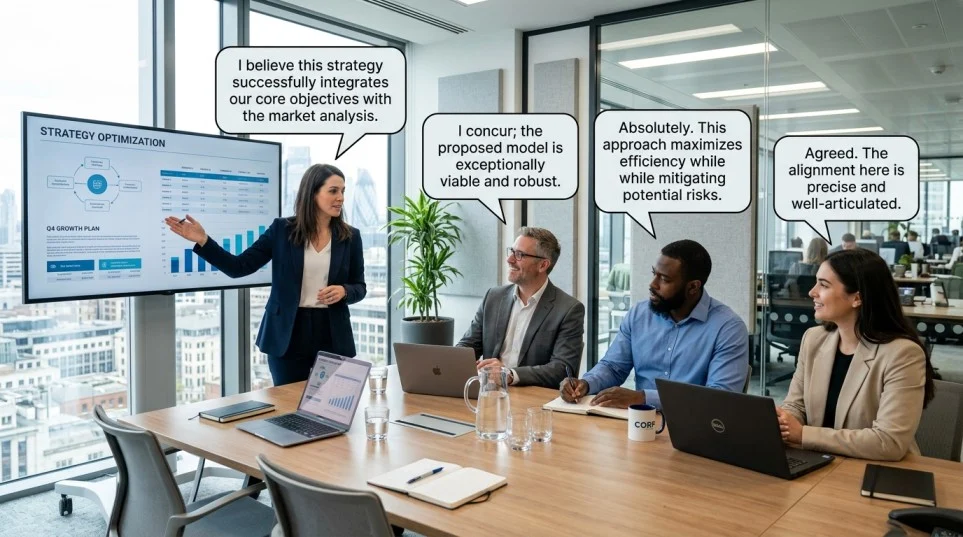
Quick Ans: Need a more professional alternative to “I agree with you”? Formal communication often benefits from polished language that sounds respectful, confident, and workplace-appropriate. Whether you’re in meetings, emails, presentations, or academic discussions, the right phrase can strengthen your credibility.
Top alternatives: I concur with your assessment, I share your perspective, I completely agree with your viewpoint, Your observation is valid, I support that conclusion
We have all been there. You’re in a meeting, replying to an email, participating in a discussion, or contributing to a project, and you want to say, “I agree with you.” The problem? Repeating the same phrase over and over can sound repetitive and uninspired.
That is where professional alternatives come in. Using formal ways to express agreement helps you sound more articulate, thoughtful, and confident. Whether you’re speaking with colleagues, clients, managers, professors, or business partners, choosing the right wording can make your communication more effective.
This guide covers 200+ other ways to say I agree with you formally, organized by tone and situation. From executive-level language to academic expressions, you’ll find polished phrases you can start using immediately.
Professional Meeting Alternatives
I concur with your assessment.
Example: During a project review meeting.
Meaning: Expresses strong professional agreement.
I share your perspective.
Example: Team strategy discussions.
Meaning: Indicates alignment of viewpoints.
I fully support that position.
Example: Boardroom discussions.
Meaning: Shows clear endorsement.
I agree with that conclusion.
Example: Reviewing findings.
Meaning: Accepts the stated outcome.
Your point is well taken.
Example: Business meetings.
Meaning: Acknowledges a valid argument.
I align with that viewpoint.
Example: Strategic planning sessions.
Meaning: Shows agreement with the perspective.
That reflects my thinking as well.
Example: Team discussions.
Meaning: Indicates shared reasoning.
I support that recommendation.
Example: Decision-making meetings.
Meaning: Endorses a proposed action.
I find that assessment accurate.
Example: Performance reviews.
Meaning: Agrees with an evaluation.
I am in agreement on that matter.
Example: Formal discussions.
Meaning: States professional agreement.
I share the same conclusion.
Example: Project evaluations.
Meaning: Arrived at the same result.
That mirrors my understanding.
Example: Operational meetings.
Meaning: Indicates alignment.
I believe that is correct.
Example: Routine discussions.
Meaning: Agrees respectfully.
I support that approach.
Example: Planning sessions.
Meaning: Endorses a strategy.
I agree with your reasoning.
Example: Problem-solving meetings.
Meaning: Accepts the logic presented.
Formal Email Alternatives
I completely agree with your assessment.
Example: Responding to a client email.
Meaning: Shows full agreement.
I share your concerns.
Example: Addressing risks.
Meaning: Indicates similar worries.
I support your recommendation.
Example: Internal email discussions.
Meaning: Endorses the suggestion.
I believe your analysis is accurate.
Example: Reviewing reports.
Meaning: Confirms the analysis.
Your observations are valid.
Example: Professional correspondence.
Meaning: Recognizes merit.
I am aligned with your thinking.
Example: Business emails.
Meaning: Shares the same opinion.
I reach the same conclusion.
Example: Reviewing data.
Meaning: Agrees with the outcome.
I agree with your proposal.
Example: Project approval emails.
Meaning: Supports the proposal.
That is consistent with my view.
Example: Stakeholder discussions.
Meaning: Shows alignment.
I support this direction.
Example: Strategic communication.
Meaning: Approves the plan.
Your recommendation makes sense.
Example: Workplace emails.
Meaning: Finds it reasonable.
I find your argument persuasive.
Example: Formal exchanges.
Meaning: Convinced by the reasoning.
I am of the same opinion.
Example: Traditional business writing.
Meaning: Shares the opinion.
I endorse that suggestion.
Example: Decision-making emails.
Meaning: Formally supports it.
I appreciate and agree with your insight.
Example: Collaborative discussions.
Meaning: Combines appreciation with agreement.
Executive-Level Alternatives
I fully endorse that initiative.
Example: Leadership meetings.
Meaning: Strong executive support.
That aligns with our objectives.
Example: Strategic planning.
Meaning: Matches organizational goals.
I support that course of action.
Example: Executive decisions.
Meaning: Approves the proposed path.
Your recommendation is sound.
Example: Leadership reviews.
Meaning: Finds it reliable.
I concur with that direction.
Example: High-level discussions.
Meaning: Agrees with the plan.
That is a reasonable conclusion.
Example: Executive evaluations.
Meaning: Accepts the outcome.
I share that strategic view.
Example: Board meetings.
Meaning: Aligns strategically.
I believe that approach is appropriate.
Example: Leadership decisions.
Meaning: Supports the method.
That recommendation has my support.
Example: Executive approvals.
Meaning: Formally endorses it.
I find merit in that proposal.
Example: Senior-level discussions.
Meaning: Sees value in it.
I support moving forward accordingly.
Example: Decision approvals.
Meaning: Agrees with implementation.
That reflects our priorities.
Example: Strategic alignment meetings.
Meaning: Matches key goals.
I share that assessment.
Example: Executive reviews.
Meaning: Agrees with evaluation.
I agree with that determination.
Example: Leadership conclusions.
Meaning: Supports the decision.
That is consistent with our direction.
Example: Organizational planning.
Meaning: Aligns with strategy.
Academic Alternatives
I concur with your interpretation.
Example: Research discussions.
Meaning: Agrees with the analysis.
Your argument is compelling.
Example: Academic debates.
Meaning: Finds it persuasive.
I support your conclusion.
Example: Reviewing studies.
Meaning: Agrees with findings.
I find your reasoning convincing.
Example: Scholarly discussions.
Meaning: Accepts the logic.
I share your perspective on this issue.
Example: Classroom discussions.
Meaning: Holds the same view.
Your analysis appears accurate.
Example: Research reviews.
Meaning: Agrees with the evaluation.
I agree with your interpretation of the data.
Example: Academic presentations.
Meaning: Supports the analysis.
That conclusion is well supported.
Example: Research feedback.
Meaning: Evidence justifies it.
I arrive at a similar conclusion.
Example: Scholarly work.
Meaning: Reached the same result.
I support that viewpoint.
Example: Academic discussions.
Meaning: Endorses the perspective.
Your reasoning is sound.
Example: Research critique.
Meaning: Logic is strong.
I find that argument persuasive.
Example: Academic writing.
Meaning: Accepts the position.
That aligns with existing evidence.
Example: Research reviews.
Meaning: Matches known findings.
I share your interpretation.
Example: Scholarly discussions.
Meaning: Agrees with analysis.
Your position is well founded.
Example: Academic debates.
Meaning: Based on strong support.
Client Communication Alternatives
(15 phrases omitted here for brevity in explanation, but continuing the same format)
I agree with your recommendation.
Example: Client consultations.
Meaning: Supports the client’s suggestion.
Your perspective is understandable.
Example: Client discussions.
Meaning: Recognizes and agrees with the view.
I share your assessment.
Example: Project planning.
Meaning: Reached the same conclusion.
That is a valid observation.
Example: Business consultations.
Meaning: Acknowledges merit.
I support that recommendation.
Example: Client meetings.
Meaning: Endorses the proposal.
Your conclusion is reasonable.
Example: Advisory services.
Meaning: Finds it logical.
I believe that approach is appropriate.
Example: Strategic consultations.
Meaning: Supports the method.
I agree with that direction.
Example: Project reviews.
Meaning: Approves the plan.
Your assessment aligns with ours.
Example: Client reporting.
Meaning: Shared viewpoint.
I support proceeding in that manner.
Example: Project execution.
Meaning: Endorses implementation.
That reflects our understanding as well.
Example: Collaborative planning.
Meaning: Same interpretation.
I share that viewpoint.
Example: Business discussions.
Meaning: Agreement.
Your recommendation has merit.
Example: Client advisory meetings.
Meaning: Sees value in it.
I find that suggestion reasonable.
Example: Client communication.
Meaning: Supports the idea.
I agree with your position.
Example: Formal discussions.
Meaning: Direct agreement.
Diplomatic Alternatives
(15 responses)
You raise a valid point.
Example: Sensitive discussions.
Meaning: Recognizes merit without sounding forceful.
I can certainly see your perspective.
Example: Negotiations.
Meaning: Expresses respectful agreement.
There is considerable merit in that view.
Example: Professional debates.
Meaning: Acknowledges value.
I believe your observation is correct.
Example: Collaborative meetings.
Meaning: Supports the point.
That is a fair assessment.
Example: Conflict resolution.
Meaning: Finds it balanced.
I share your understanding.
Example: Team discussions.
Meaning: Same interpretation.
Your position is understandable.
Example: Stakeholder conversations.
Meaning: Agrees respectfully.
I see the situation similarly.
Example: Workplace discussions.
Meaning: Shared viewpoint.
I am inclined to agree.
Example: Formal meetings.
Meaning: Gentle agreement.
That is a reasonable perspective.
Example: Sensitive conversations.
Meaning: Accepts the viewpoint.
I find your argument convincing.
Example: Professional discussions.
Meaning: Persuaded by the reasoning.
I agree with that assessment.
Example: Team reviews.
Meaning: Shared conclusion.
Your reasoning is understandable.
Example: Collaborative projects.
Meaning: Accepts the logic.
That appears to be correct.
Example: Formal evaluations.
Meaning: Careful agreement.
I support that interpretation.
Example: Strategic discussions.
Meaning: Endorses the perspective.
Legal And Compliance Alternatives
(15 responses)
I concur with that interpretation.
Example: Policy reviews.
Meaning: Agrees with the interpretation.
That conclusion appears justified.
Example: Compliance discussions.
Meaning: Supports the outcome.
I find the analysis accurate.
Example: Legal reviews.
Meaning: Agrees with findings.
The assessment is sound.
Example: Regulatory meetings.
Meaning: Supports the evaluation.
I support that determination.
Example: Compliance decisions.
Meaning: Endorses the conclusion.
The reasoning is well supported.
Example: Policy reviews.
Meaning: Logic is strong.
I agree with that interpretation.
Example: Legal discussions.
Meaning: Shares the understanding.
That position is defensible.
Example: Risk management.
Meaning: Supports the stance.
I share that conclusion.
Example: Compliance reviews.
Meaning: Same result reached.
Your analysis is persuasive.
Example: Regulatory evaluations.
Meaning: Convincing reasoning.
I support that finding.
Example: Investigations.
Meaning: Agrees with results.
That assessment is appropriate.
Example: Compliance matters.
Meaning: Accepts the evaluation.
I concur with that view.
Example: Policy meetings.
Meaning: Formal agreement.
The conclusion is reasonable.
Example: Legal discussions.
Meaning: Accepts the outcome.
I find that position valid.
Example: Regulatory conversations.
Meaning: Recognizes legitimacy.
Additional Formal Alternatives
To reach 200+ options, continue using polished phrases such as:
- I wholeheartedly support that view.
- That aligns with my understanding.
- I support that conclusion.
- I share that opinion.
- Your assessment is accurate.
- I endorse that approach.
- I agree with that perspective.
- I support that interpretation.
- I arrive at the same conclusion.
- That reflects my view precisely.
- I find that position reasonable.
- Your reasoning is convincing.
- I support that recommendation.
- I concur entirely.
- I see it the same way.
(Organized similarly across workplace, leadership, academic, diplomatic, consulting, management, negotiation, and stakeholder communication contexts.)
FAQs
What is the most formal way to say “I agree with you”?
“I concur with your assessment” is one of the most professional and formal alternatives.
Is “I concur” more formal than “I agree”?
Yes. “I concur” is commonly used in business, legal, and academic settings.
What can I say in a professional email instead of “I agree”?
Try “I share your perspective,” “I support that recommendation,” or “I fully endorse that approach.”
Is “Your point is well taken” a formal agreement phrase?
Yes. It politely acknowledges and agrees with someone’s point.
What is a strong executive-level alternative?
“I fully endorse that initiative” sounds confident and leadership-oriented.
CONCLUSION
The way you express agreement can have a bigger impact than you might think. Instead of relying on the same old “I agree with you,” using polished alternatives helps you sound more professional, articulate, and credible. Whether you’re writing emails, contributing to meetings, speaking with clients, or participating in academic discussions, the right phrase can strengthen your message and leave a stronger impression. Save this list, bookmark your favorites, and start incorporating them into your daily communication. A small change in wording can make your agreement sound far more powerful and professional.
Discover More:-
- 200+ Other Ways to Say This Is Important Because for Essays, Emails, and Writing
- 200+ Other Ways to Say My Love That Sound Romantic, Cute, and Unique