
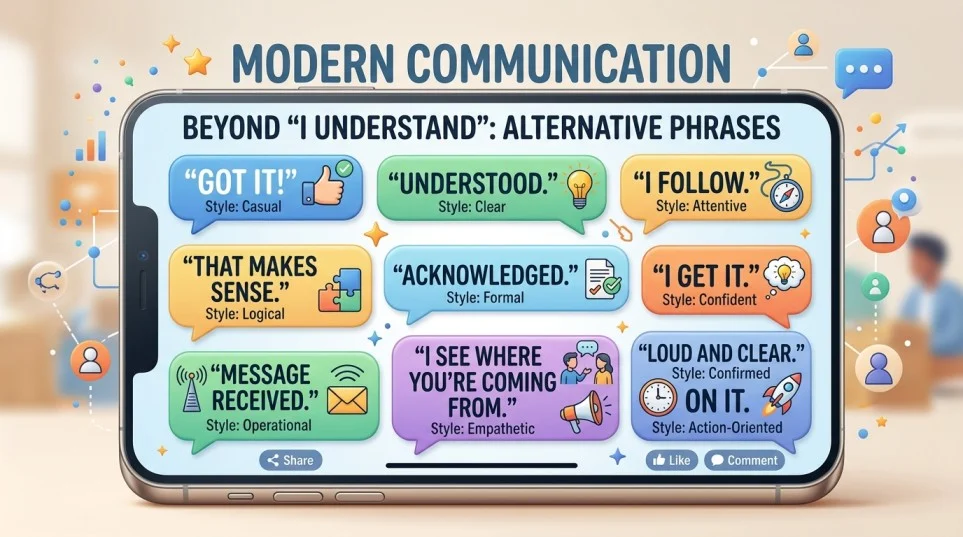
Quick Ans: If you want to sound more natural, professional, empathetic, or conversational, there are plenty of better alternatives to “I understand.” The best choice depends on the situation, your relationship with the person, and the tone you want to create.
Top alternatives: I get it, That makes sense, I hear you, I see where you’re coming from, I completely understand
We all say “I understand” a lot. In texts, emails, meetings, conversations with friends, and even during difficult discussions, it often becomes the default response. The problem? It can sometimes sound repetitive, formal, or even a little robotic.
Whether you’re comforting a friend, responding to a coworker, chatting with a crush, or navigating a tricky conversation, using different ways to express understanding can make your communication feel warmer, more genuine, and more memorable.
The right phrase can show empathy, build trust, and help people feel truly heard. Sometimes you want to sound professional. Other times you want to sound supportive, casual, confident, or emotionally present.
This guide shares 200+ other ways to say I understand, organized by mood, tone, and situation so you’ll always have the perfect response ready.
Casual Alternatives
I get it.
Example: Responding to a friend explaining a busy schedule.
Meaning: Shows simple understanding in a relaxed way.
Makes sense.
Example: Reacting to someone’s explanation.
Meaning: Signals agreement and comprehension.
I see.
Example: During a casual conversation.
Meaning: Acknowledges information.
Gotcha.
Example: Quick text responses.
Meaning: Informal understanding.
I hear you.
Example: Listening to a friend vent.
Meaning: Shows attention and understanding.
Fair enough.
Example: Accepting someone’s reasoning.
Meaning: Acknowledges their point.
That tracks.
Example: Casual online chats.
Meaning: Indicates their explanation fits.
Okay, I follow.
Example: During discussions.
Meaning: Shows you’re keeping up.
I can see that.
Example: Reacting to someone’s perspective.
Meaning: Acknowledges validity.
That adds up.
Example: Understanding an explanation.
Meaning: Shows logical agreement.
I follow you.
Example: Casual conversations.
Meaning: Indicates understanding.
I get where you’re coming from.
Example: Personal discussions.
Meaning: Recognizes perspective.
Right, I see what you mean.
Example: Everyday conversations.
Meaning: Shows comprehension.
I understand that.
Example: Casual discussions.
Meaning: Direct acknowledgment.
I can see why.
Example: Discussing feelings or decisions.
Meaning: Recognizes reasoning.
Professional Alternatives
I understand your perspective.
Example: Workplace discussions.
Meaning: Professional acknowledgment.
That makes sense.
Example: Team meetings.
Meaning: Confirms understanding.
I appreciate the clarification.
Example: Business emails.
Meaning: Shows gratitude and comprehension.
I see your point.
Example: Professional conversations.
Meaning: Recognizes their viewpoint.
Thank you for explaining.
Example: Workplace communication.
Meaning: Acknowledges effort.
I understand the situation.
Example: Project discussions.
Meaning: Shows awareness.
That provides useful context.
Example: Team updates.
Meaning: Indicates comprehension.
I appreciate your insight.
Example: Formal conversations.
Meaning: Values their contribution.
I can see the reasoning behind that.
Example: Strategic discussions.
Meaning: Recognizes logic.
Your explanation is clear.
Example: Professional settings.
Meaning: Confirms understanding.
I have a better understanding now.
Example: Meetings and briefings.
Meaning: Shows learning.
I see how that impacts things.
Example: Business decisions.
Meaning: Acknowledges consequences.
That helps clarify the situation.
Example: Workplace communication.
Meaning: Shows comprehension.
I understand your concerns.
Example: Client interactions.
Meaning: Demonstrates empathy.
I appreciate the explanation.
Example: Professional exchanges.
Meaning: Signals understanding.
Empathetic Alternatives
I hear you.
Example: A friend sharing frustrations.
Meaning: Shows emotional support.
That sounds really difficult.
Example: Someone discussing challenges.
Meaning: Acknowledges hardship.
I can understand why you feel that way.
Example: Emotional conversations.
Meaning: Validates feelings.
That must be tough.
Example: Supporting someone.
Meaning: Shows compassion.
I see where you’re coming from.
Example: Sensitive discussions.
Meaning: Recognizes perspective.
I can imagine how that feels.
Example: Emotional situations.
Meaning: Demonstrates empathy.
Your feelings make sense.
Example: Comforting a friend.
Meaning: Validates emotions.
I get why that matters to you.
Example: Personal conversations.
Meaning: Shows emotional awareness.
That sounds frustrating.
Example: Listening to complaints.
Meaning: Acknowledges emotions.
I understand how important that is.
Example: Meaningful discussions.
Meaning: Shows respect.
I can relate to that.
Example: Shared experiences.
Meaning: Creates connection.
That would be hard for anyone.
Example: Offering support.
Meaning: Provides validation.
I understand what you’re going through.
Example: Emotional support.
Meaning: Shows empathy.
That makes complete sense.
Example: Discussing emotions.
Meaning: Validates perspective.
I appreciate you sharing that.
Example: Personal conversations.
Meaning: Acknowledges vulnerability.
Confident Alternatives
I completely understand.
Example: Leadership conversations.
Meaning: Shows certainty.
I understand the situation clearly.
Example: Decision-making discussions.
Meaning: Signals confidence.
I have a solid grasp of it.
Example: Workplace settings.
Meaning: Indicates strong understanding.
Crystal clear.
Example: Informal professional exchanges.
Meaning: Shows certainty.
I see the full picture.
Example: Strategic conversations.
Meaning: Demonstrates awareness.
Understood.
Example: Direct communication.
Meaning: Concise acknowledgment.
I’ve got it.
Example: Instructions or requests.
Meaning: Shows readiness.
I follow completely.
Example: Discussions and presentations.
Meaning: Signals total understanding.
Everything makes sense now.
Example: Clarifications.
Meaning: Shows comprehension.
I understand perfectly.
Example: Important conversations.
Meaning: Strong acknowledgment.
That is clear to me.
Example: Professional settings.
Meaning: Shows certainty.
I have the picture now.
Example: Complex discussions.
Meaning: Indicates understanding.
I see exactly what you mean.
Example: Clarification moments.
Meaning: Demonstrates precision.
Message received.
Example: Direct conversations.
Meaning: Shows comprehension.
I am on the same page.
Example: Team discussions.
Meaning: Indicates alignment.
Friendly Alternatives
I know what you mean.
Example: Conversations with friends.
Meaning: Relatable understanding.
Totally get it.
Example: Casual texts.
Meaning: Strong agreement.
I can see that.
Example: Everyday chats.
Meaning: Recognizes their point.
You’re making sense.
Example: Friendly discussions.
Meaning: Encourages the speaker.
I get where you’re coming from.
Example: Personal conversations.
Meaning: Acknowledges perspective.
That makes a lot of sense.
Example: Friendly exchanges.
Meaning: Shows agreement.
I can understand that.
Example: Casual support.
Meaning: Recognizes feelings.
I see your side.
Example: Discussions between friends.
Meaning: Shows openness.
I feel you.
Example: Informal conversations.
Meaning: Demonstrates connection.
You’re right.
Example: Agreeing with someone’s point.
Meaning: Shows validation.
I hear what you’re saying.
Example: Friendly discussions.
Meaning: Acknowledges their thoughts.
I understand where you’re at.
Example: Personal conversations.
Meaning: Shows empathy.
I get your point.
Example: Everyday conversations.
Meaning: Signals understanding.
That is understandable.
Example: Supportive chats.
Meaning: Validates reasoning.
I can appreciate that.
Example: Respectful conversations.
Meaning: Shows recognition.
Polite Alternatives
Thank you, I understand.
Example: Professional interactions.
Meaning: Polite acknowledgment.
I appreciate that explanation.
Example: Formal discussions.
Meaning: Shows gratitude.
I see what you mean.
Example: Respectful conversations.
Meaning: Acknowledges perspective.
Thank you for clarifying.
Example: Emails and meetings.
Meaning: Shows appreciation.
That is clear now.
Example: Formal settings.
Meaning: Indicates understanding.
I understand your position.
Example: Respectful disagreement.
Meaning: Recognizes viewpoint.
I follow your reasoning.
Example: Formal discussions.
Meaning: Shows comprehension.
I appreciate your perspective.
Example: Professional communication.
Meaning: Values their input.
That helps me understand.
Example: Clarification moments.
Meaning: Shows progress.
I acknowledge your point.
Example: Formal conversations.
Meaning: Respectful recognition.
I understand your concerns.
Example: Sensitive discussions.
Meaning: Demonstrates empathy.
I recognize the issue.
Example: Workplace situations.
Meaning: Shows awareness.
I see the situation more clearly now.
Example: Clarification discussions.
Meaning: Indicates understanding.
That explanation helps.
Example: Professional exchanges.
Meaning: Appreciates clarity.
I understand completely.
Example: Formal responses.
Meaning: Full acknowledgment.
Funny Alternatives
My brain has downloaded the information.
Example: Playful conversations.
Meaning: Humorous understanding.
The message has landed.
Example: Casual chats.
Meaning: Shows comprehension.
Processing complete.
Example: Tech-savvy humor.
Meaning: Understanding confirmed.
My last two brain cells got it.
Example: Meme-style conversations.
Meaning: Self-deprecating humor.
Okay, the puzzle piece fits now.
Example: Lighthearted discussions.
Meaning: Things make sense.
I picked up what you’re putting down.
Example: Friendly banter.
Meaning: Casual understanding.
My WiFi finally connected.
Example: Funny texting moments.
Meaning: Understanding arrived.
The plot is making sense now.
Example: Story discussions.
Meaning: Clarity achieved.
My brain just clocked in.
Example: Humorous chats.
Meaning: Finally understood.
The math is mathing now.
Example: Gen Z conversations.
Meaning: Things add up.
Consider me informed.
Example: Playful responses.
Meaning: Understanding confirmed.
My confusion has left the chat.
Example: Internet humor.
Meaning: Clear understanding.
The dots have connected.
Example: Casual conversations.
Meaning: Everything makes sense.
That unlocked a new level of understanding.
Example: Gaming references.
Meaning: Greater clarity.
My brain says yes.
Example: Funny texts.
Meaning: Understanding achieved.
FAQs
What can I say instead of “I understand”?
You can say “I get it,” “I hear you,” “That makes sense,” “I see your point,” or “I follow.”
What is the most professional alternative?
“I understand your perspective” and “Thank you for clarifying” work well in professional settings.
What is the most empathetic alternative?
“I hear you” and “I can understand why you feel that way” show strong emotional support.
Can I use slang instead of “I understand”?
Yes. Phrases like “Gotcha,” “I feel you,” and “The math is mathing” are common in casual conversations.
Is “I hear you” the same as “I understand”?
Not exactly. “I hear you” often carries more emotional validation and empathy.
CONCLUSION
The phrase “I understand” is useful, but using the same response repeatedly can make conversations feel flat. Whether you’re talking to a friend, coworker, client, family member, or someone special, the right alternative can make your message feel more thoughtful, authentic, and memorable.
From professional phrases and empathetic responses to funny one-liners and casual expressions, you now have plenty of options to fit any situation. Save this list, bookmark your favorites, and start mixing them into your daily conversations. A small change in wording can make a surprisingly big difference in how people feel heard and understood.
Discover More:-
- 200+ Other Ways to Say This Is Important Because for Essays, Emails, and Writing
- 200+ Other Ways to Say My Love That Sound Romantic, Cute, and Unique